State Income Tax Obligations for Remote Workers
One remote worker can trigger tax obligations in an entirely new state.
Nexus is the threshold at which a state can assert taxing authority over a business. Its application to remote work is more aggressive than most employers ever anticipate, and the distance between what companies assume and what states actually require is where liability quietly accumulates.
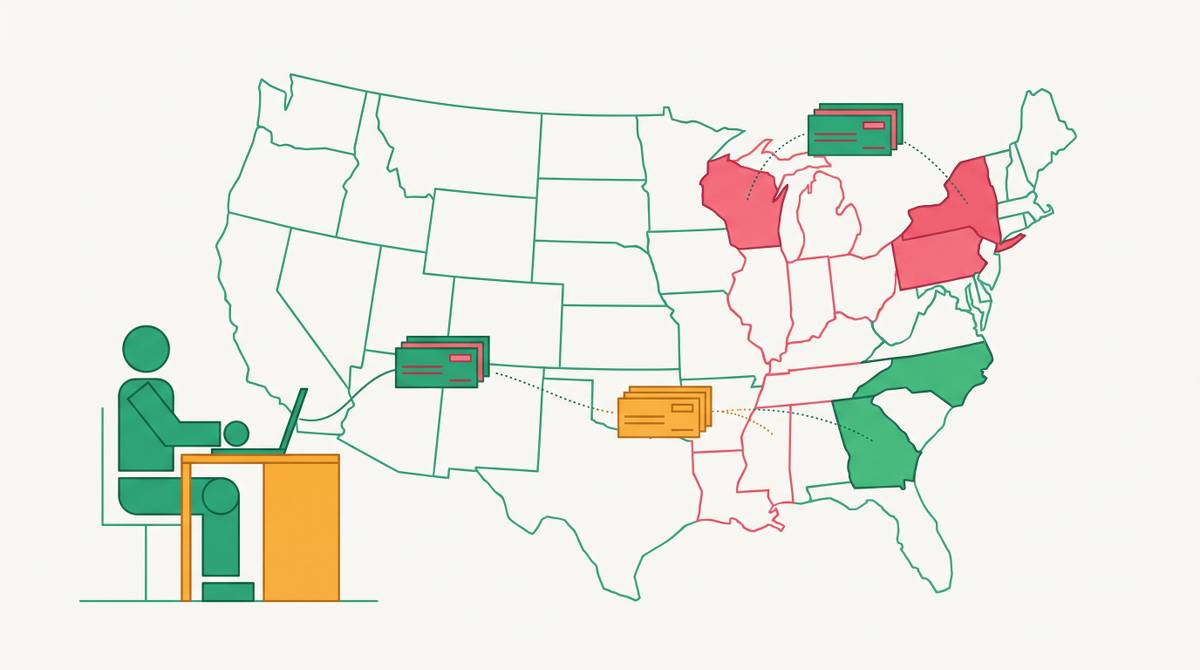
A remote employee's physical presence in a state is sufficient to establish nexus for the employer, even if that employer has no office, no property, and no sales operations anywhere in that state. The employee's body, sitting in an apartment two time zones away, is the jurisdictional hook. Once nexus attaches, it triggers obligations well beyond payroll tax: corporate income tax filings, sales tax registration, and various state-level reporting requirements, the precise mix depending on the jurisdiction.
Most states now apply factor-based nexus standards, weighing combinations of payroll, property, and sales apportioned to the state. A single remote worker's salary can tip the payroll factor threshold, pulling the employer into that state's corporate tax apparatus. No letter arrives. No notice. The obligation simply begins, and the clock starts running.
Companies track office locations with precision. Far fewer track where their employees are actually working on any given week, and fewer still have connected those two data streams in a single system. The exposure surfaces later, usually as a notice of back taxes, interest, and penalties covering every period the obligation existed unmet. That period is typically a long one.
The Convenience-of-the-Employer Rule and Why New York Creates the Most Exposure
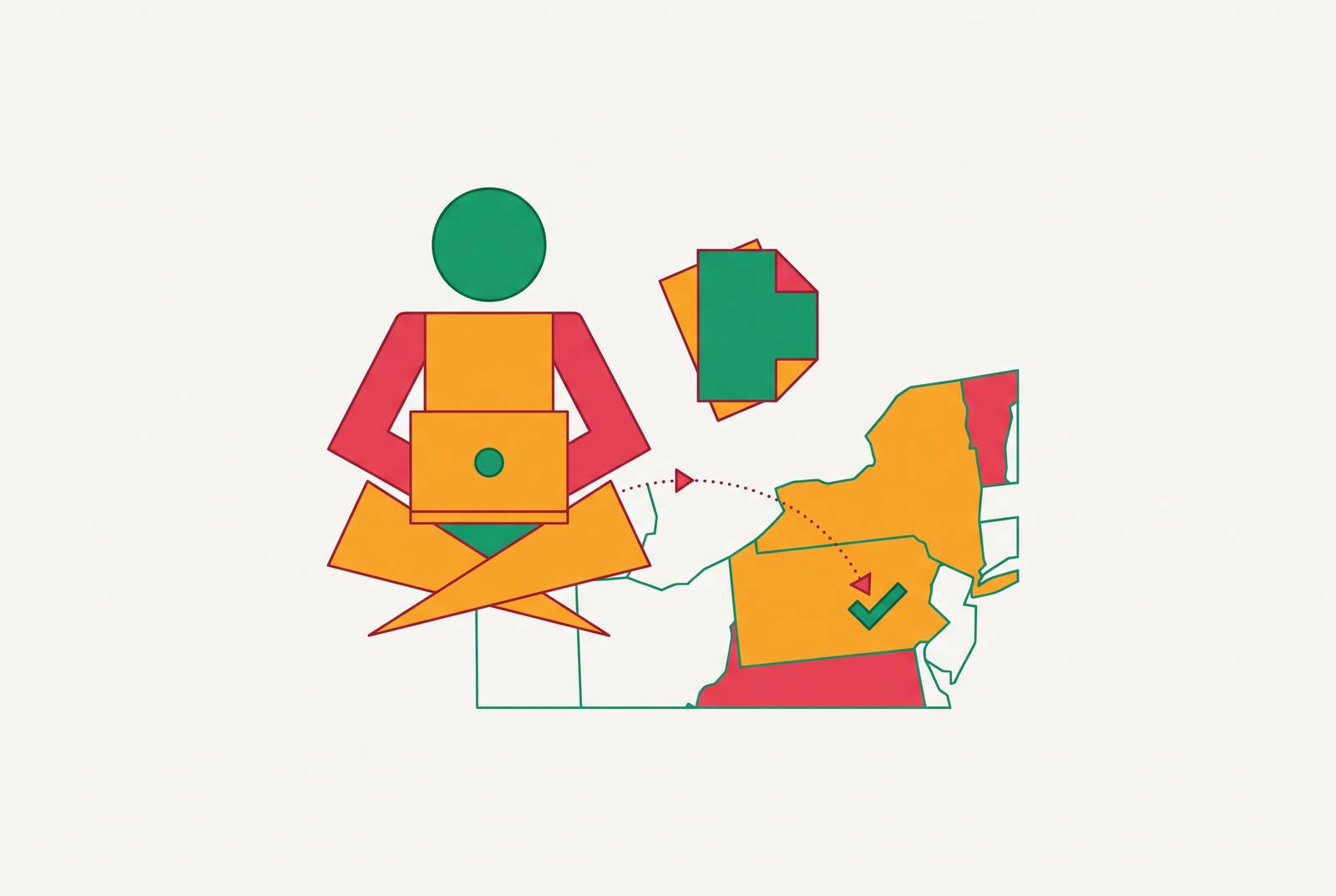
A small but consequential set of states applies what is known as the convenience-of-the-employer rule. New York, Delaware, Nebraska, Pennsylvania, and Arkansas are the principal examples. The rule holds that if a nonresident employee works remotely for their own convenience rather than because the employer affirmatively requires it, the income is sourced to the employer's state regardless of where the employee physically sits.
The practical consequence is severe. A worker who lives in New Jersey but whose employer is headquartered in New York will owe New York income tax even if they rarely or never set foot in the state. The bar for satisfying the "employer necessity" exception is high, and courts have consistently found that hiring someone remotely because that's where the candidate lives doesn't meet it. That distinction, between genuine operational necessity and hiring preference, is the one that costs companies the most in practice.
In 2025, New York's Tax Appeals Tribunal upheld the convenience rule in the Zelinsky case, finding that most remote work arrangements don't satisfy the necessity standard. An appellate challenge is expected, which means the legal landscape remains unsettled, but the operative rule as it stands favors the state's taxing authority.
For employers headquartered in convenience-rule states, the implication runs inward as well. They owe withholding in their own state for workers who never come near the office. The rule also creates genuine double-taxation risk for employees, who can find themselves taxed simultaneously by both their home state and the employer's state. Tax credits offset some of this burden, but not always completely, and the administrative complexity falls on both the employee's return and the employer's withholding mechanics. The states that impose this rule have shown no urgency to reform it.
How De Minimis Thresholds and Reciprocity Agreements Reduce, but Do Not Eliminate, the Burden
De minimis thresholds are the most common form of relief from day-one withholding obligations. Some states allow a defined number of days worked within the state before a withholding obligation attaches, and below that threshold, neither the employer nor the employee owes anything to that state. It sounds clean until you start counting actual workdays across a mobile workforce.
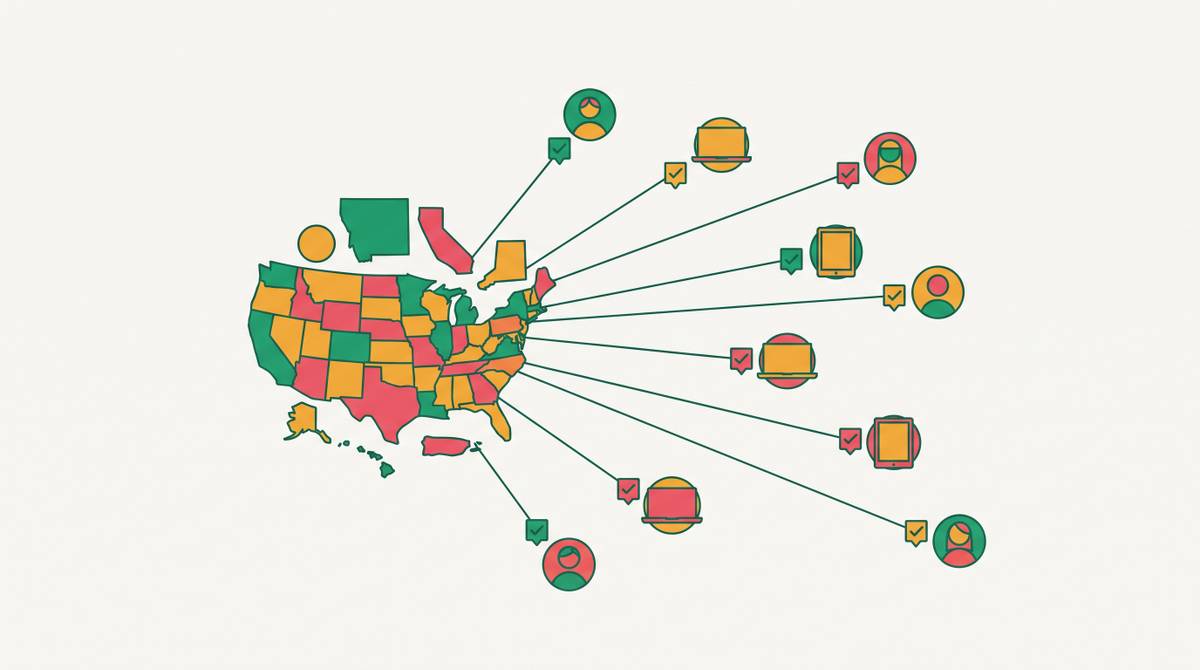
Many states with income taxes have no de minimis threshold at all. In those jurisdictions, a single day of work within the state triggers a filing obligation for the employee and a withholding obligation for the employer. The variation is substantial and follows no intuitive geographic or political pattern. You simply have to know it, jurisdiction by jurisdiction, and you have to know when it changes.
Recent legislative movement illustrates how quickly the landscape shifts. Louisiana raised its safe harbor threshold and removed its mutuality requirement, meaning the protection now applies to nonresident workers regardless of what their home state does. Alabama moved in the opposite direction, introducing a threshold but pairing it with a mutuality requirement: the benefit applies only if the employee's home state has a comparable rule. Two states, two recent changes, two entirely different structural approaches. The employer must know both.
Reciprocity agreements offer a different form of relief. Where two states have one in place, an employee files income taxes only in their home state, eliminating the dual-withholding problem entirely. Ohio and Kentucky, and Maryland and Virginia, are established examples. The list is finite and specific, and it doesn't grow quickly.
What reciprocity doesn't cover matters equally. It applies to income tax only. Unemployment insurance, workers' compensation, and paid leave obligations are entirely separate and go untouched by any reciprocity agreement. Even where reciprocity exists, it doesn't apply automatically: the employer must obtain an exemption certificate from the employee and update payroll to reflect it. Skipping that step negates the relief entirely.
What the National Taxpayers Union Foundation's ROAM Index Reveals About State-by-State Variation
The ROAM Index, published by the National Taxpayers Union Foundation, ranks states annually on the burden their tax rules impose on remote and mobile workers. ROAM stands for Remote Obligations and Mobility. The index evaluates states against criteria including threshold clarity, the presence or absence of the convenience-of-the-employer rule, and the tractability of registration processes.
The 2025 rankings identify New York and Delaware as among the most burdensome states for remote work compliance. Both apply the convenience-of-the-employer rule and impose registration and withholding requirements with little administrative flexibility. States at the other end of the index offer clear safe harbor thresholds, no convenience rule, and streamlined registration pathways.
The index's most useful contribution isn't any single state's ranking. It's the structural reality the index makes visible: the same remote work policy, applied uniformly across all hiring decisions, will produce profoundly different compliance outcomes depending solely on which states employees end up in. A company using a single, undifferentiated approach to remote hiring isn't operating a consistent policy. It's absorbing whatever liability it happens to land in, state by state, without necessarily knowing which states those are or what each one costs.
Where workers live is not solely an HR question or a real estate question. It's a tax liability question. The employee location data and the registration status data need to live in the same system, because one determines the other in real time.
The Registration and Withholding Mechanics Employers Have to Execute State by State
Before the first paycheck can be issued with correct withholding in a new state, the employer must typically register with both the state's department of revenue and its department of labor. These are separate agencies with separate processes, separate forms, separate timelines, and separate account numbers. There's no unified federal portal. Each state is its own discrete project, managed on its own schedule, and nobody from the state is going to remind you to start.
After registration, the employer must configure state income tax withholding in its payroll system, apply the correct state tax tables, and remit on the state's schedule. Remittance frequency varies: some states require monthly deposits, others quarterly, others annual, with thresholds tied to total liability size. Getting the schedule wrong generates its own class of penalties, entirely independent of the underlying tax.
Unemployment insurance is a separate track. It requires registration with the state's workforce agency, the establishment of a separate employer account, and a state-determined rate based on the employer's industry and claims history. Workers' compensation often requires a separate insurance policy, or an endorsement specifically covering the employee's state of residence.
Paid Family and Medical Leave obligations add further complexity. As of early 2026, more than a dozen states operate mandatory PFML programs, and several either launched or significantly expanded their programs in 2026. Each carries its own contribution rates, payroll deduction mechanics, and employer remittance requirements. Michigan's full implementation of its Earned Sick Time Act in 2026, paired with active audit signaling from the enforcement agency, is an instructive example: a new state obligation that arrived with enforcement teeth in its first year.
The failure mode across all of this is quiet. It is the accumulation of unregistered liability in every state where registration should have been triggered and wasn't.
Why Silent Liability Compounds Faster Than Most Finance Teams Expect
Each pay period processed without correct state registration is another period of unpaid withholding, unremitted taxes, and accruing interest. The clock runs from the date the obligation began, not the date someone at the company discovered it existed. Those two dates are rarely close together. In my experience, the interval between them is often measured in years.
States do eventually find unregistered employers. W-2 data mismatches, employee state tax return audits, and cross-state data sharing among revenue agencies are the primary discovery pathways. When a state finds what it's looking for, the resulting bill includes full back taxes for all open periods, interest from the date each obligation began, and penalty assessments on top of both. When a company has been expanding across multiple states simultaneously without registering in any of them, the effect isn't additive. It compounds geometrically, and the final number has a way of shocking even people who thought they understood the exposure.
The One Big Beautiful Bill Act introduces new W-2 reporting requirements and earnings classifications that expand the existing compliance surface. Employers relying on manual earnings code mapping are more exposed to reporting errors under these requirements, because the precision the new rules demand reliably exceeds what manual processes can sustain at scale.
The core visibility problem, in companies not yet fully automated, is the absence of a single place to see which states have active withholding registrations, which are in process, and which are missing entirely. A scaling company growing from a few dozen employees to several hundred across multiple states doesn't have a compliance problem that grows linearly with headcount. Every new state added intersects with every existing obligation category.
Voluntary disclosure programs exist in many states and can reduce penalties for employers who come forward before discovery. Retroactive compliance costs the registration, plus everything that should have been paid, plus interest, plus penalties. Staying current costs only the registration. That math isn't complicated, and it favors acting before the state does.
What the Operational Infrastructure for Multi-State Compliance Actually Requires
The core requirement isn't deeper knowledge of state tax rules, though that matters. It's a system that tracks where every employee is working, monitors which registrations are active, and triggers the correct actions automatically when a new state enters the picture.
Manual tracking through spreadsheets, calendar reminders, and periodic emails to outside counsel functions adequately at very low headcount. It breaks down as the workforce spreads, and the breakdown is rarely sudden. It's gradual and invisible, which is precisely what makes it dangerous. The point of failure is usually discovered in retrospect, at audit, when the accumulated liability has already grown well past what anyone budgeted for.
The system needs to do several specific things: detect when a new state is introduced by a hire or a location change; initiate state registration without requiring a human to remember to do so; configure withholding correctly from the first paycheck in that state; monitor for legislative changes, including safe harbor threshold adjustments, new PFML programs, and rate changes; and surface reciprocity agreement applicability where relevant. Legacy payroll platforms were built to process payroll, not to own the compliance workflows upstream of it. They require a human to know which registrations are needed and to set them up. That design assumption made sense when most workforces were geographically concentrated. It doesn't hold for a distributed workforce.
Convenience-rule disputes and voluntary disclosure negotiations still benefit from qualified counsel; no automated system substitutes for professional judgment in those situations. But for the underlying registration and withholding mechanics, automated platforms suited to this compliance surface operate across all fifty U.S. states, monitor thousands of tax jurisdictions, open state tax accounts, and resolve compliance notices without requiring finance or HR teams to manage the process manually.
The difference between companies that have automated this infrastructure and those still managing it manually won't show up primarily in audit frequency. It will show up in the size of the bill when an audit arrives, and in whether the company has any defensible basis for arguing the exposure was contained.