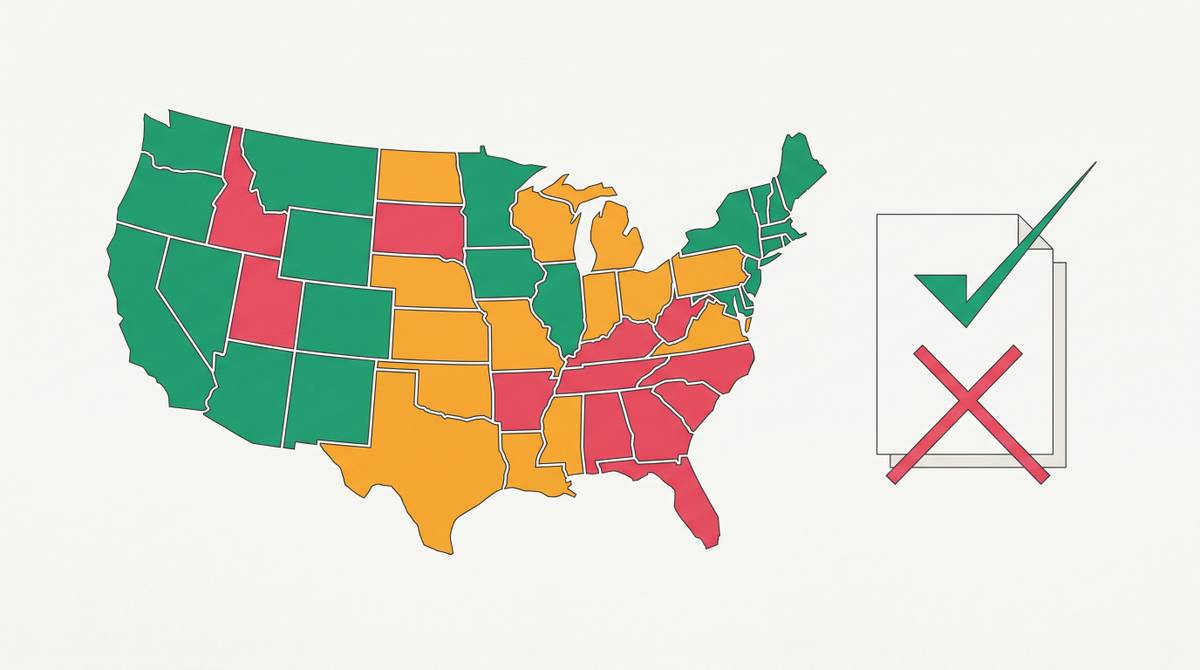
Independent Contractor vs Employee Classification Tests
The 2024 DOL rule ditches shortcuts and uses six factors to determine employee status.
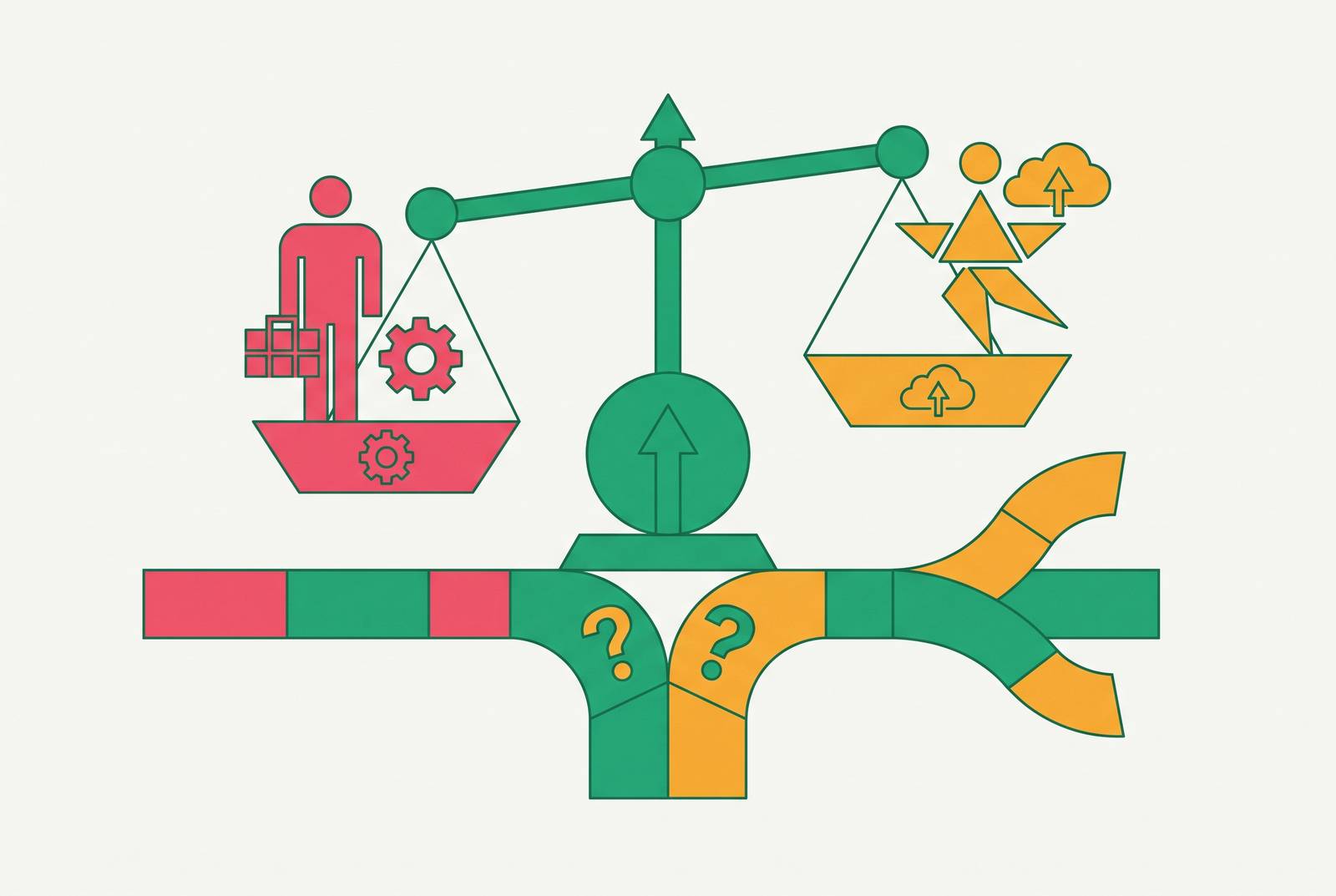
The DOL published its final rule on January 10, 2024, effective March 11, 2024. The rule it replaced, finalized in 2021, had elevated two factors to near-dispositive status: the employer's control over the work and the worker's opportunity for profit or loss. Under that prior framework, a company could anchor its contractor defense on those two factors and build outward from them. The 2024 rule dismantled that architecture. What replaced it is a genuine six-factor balancing test in which no single factor controls.
The six factors are:
- the worker's opportunity for profit or loss depending on managerial skill
- the relative investments made by the worker and the employer in tools, equipment, or helpers
- the degree of permanence in the working relationship
- the nature and degree of control the employer exercises
- whether the work is integral to the employer's business
- the skill and initiative the worker applies, specifically whether that skill is exercised in an open-market context or only within this particular engagement
The animating question underneath all six factors is economic dependence. If the totality of the analysis shows that a worker relies on one employer for their livelihood, the DOL will treat that worker as an employee, regardless of what any contract says. That last clause isn't incidental. The agency examines how work actually functions. No contract language has ever reversed that calculus once the underlying facts were unfavorable, and the 2024 rule makes clear the agency intends to press that point.
For operators, the red flags are specific: an exclusive long-term engagement, company-supplied hardware or software, defined availability windows, work that forms a core function of the business. Each factor points toward employment status, even when the worker signed a contractor agreement and genuinely believed themselves to be independent. The agreement records intent. The DOL test measures the reality of how the work is actually performed.
How the IRS Common Law Test approaches the same question from a tax angle
Where the DOL enforces wage-and-hour law, the IRS is looking for unreported payroll taxes. The question shifts from whether a worker deserves minimum wage and overtime protection to whether the employer should have been withholding income taxes and remitting Social Security and Medicare contributions all along. That different objective produces a different, though substantially overlapping, analytical lens.
The IRS organizes its analysis into three categories. Platforms like Warp, which monitors payroll across 10,000+ tax jurisdictions, are built to track these distinctions automatically. Behavioral control asks whether the business directs how, when, and where the work is performed. Financial control asks whether the worker carries unreimbursed business expenses, invests in their own tools, serves multiple clients, and sets their own rates. The type-of-relationship category considers written contracts, employee benefits, permanence, and whether the work is central to the employer's business.
The IRS historically applied a 20-factor checklist derived from common law doctrine. Current guidance consolidates those factors under the three-category structure, but the underlying substance hasn't changed as dramatically as the DOL's 2024 revision did. The criteria were reorganized more than reconceived. That's worth understanding precisely, because practitioners who read the consolidation as a substantive liberalization of IRS scrutiny have been surprised by what audits actually look like.
That said, a company can satisfy the DOL's economic reality framework and still fail IRS scrutiny. A worker with genuine economic independence, multiple clients, and no employer-supplied tools can still show strong behavioral control indicators if the employer dictates work methods, requires attendance at internal meetings, or specifies the sequence of tasks. These two tests can and do produce divergent results on identical facts. The divergence isn't a loophole. It's a second exposure running in parallel, quietly, while companies assume their DOL analysis has done the full job.
Two IRS mechanisms shape how companies manage this risk. Form SS-8 allows a worker or employer to request a formal classification determination, but filing one signals that the relationship is already under scrutiny and initiates a review process that routinely extends well over a year. Section 530 relief offers a safe harbor for employers who have consistently treated a worker as a contractor, filed all required forms on that basis, and had a reasonable, documented basis for doing so, whether through reliance on a court ruling, a published IRS ruling, or a recognized industry practice. The protection is meaningful but narrow. Section 530 shields only against IRS employment tax liability. It provides no cover against DOL enforcement or state-level claims.
Why state ABC tests are the hardest standard to meet — and which states impose them
Federal tests begin from a neutral starting point and require the enforcing agency to build a case for employee status. The ABC test inverts that logic entirely. Under an ABC framework, the default presumption is employment. The burden falls on the company to prove all three prongs are satisfied. Failure on any single prong ends the analysis. The result is employee classification, full stop.
The three prongs, in their common form, require that the worker is free from the hiring entity's control and direction both contractually and in practice; that the work is performed outside the usual course of the hiring entity's business; and that the worker is customarily engaged in an independently established trade, occupation, or business of the same nature as the work performed.
Prong B is where most technology and professional services companies face their hardest obstacle. A logistics company can't credibly argue that its delivery drivers operate outside the usual course of its business. A software company can't credibly argue that a developer building core product features is doing something extrinsic to its operations. This isn't a close call. Work that is central to the business, precisely the profile of contractors many high-growth companies rely on most heavily, is disqualifying under Prong B. Workforce models built on that contractor profile are legally indefensible in California from day one. Companies that encounter this mid-scale, which happens more often than the post-mortems acknowledge, have far fewer structural options than those that modeled the exposure before expanding.
California, Massachusetts, and New Jersey apply the ABC test. California's version, established by the state Supreme Court in Dynamex and subsequently codified in AB5, is broadly considered the most restrictive iteration in the country. The sustained litigation and multiple legislative carve-outs it has generated since passage reflect how many existing contractor relationships it exposed as legally indefensible — not how flawed the statute is. That distinction tends to get lost in the political coverage.
The analytical complexity compounds further because states don't always apply a single test uniformly across all labor statutes. A given state may use the ABC test for unemployment insurance purposes while applying a different standard for workers' compensation or wage-and-hour claims. One contractor relationship in one of these jurisdictions therefore requires two separate state-level analyses to fully evaluate its exposure.
How multi-state expansion multiplies classification exposure
A contractor relationship that survives federal scrutiny under both the DOL and IRS frameworks can become entirely indefensible the moment a worker relocates to California or Massachusetts, or the moment the company begins hiring in those states. The contract doesn't change. The work doesn't change. The applicable legal framework governing that relationship changes completely, and the analysis must begin again from the strictest test in the new jurisdiction.
Remote work surfaces this problem constantly, and it surfaces it without any clear notification to the company. A worker who moves from a state with no ABC test to one that applies it hasn't renegotiated anything with their client. But the company's classification risk in that relationship has shifted materially, often without anyone at the company recognizing it happened. There's no trigger event, no disclosure obligation, no moment where the risk becomes visible. It accrues silently.
Multi-state payroll registration is a visible compliance step. Classification risk in new states is structurally invisible until enforcement or litigation surfaces it. Companies that treat payroll registration as the full scope of their multi-state compliance obligation are leaving a significant exposure unaddressed. These aren't the same process.
State expansion also carries nexus implications beyond payroll. In some state interpretations, having workers, including workers classified as contractors, operating within a state can create corporate income tax and franchise tax registration obligations. Most operators don't model this when they begin expanding geographically.
The compounding dynamic is arithmetically straightforward but routinely underestimated in practice. A company that grows from operations in 5 states to 20 states over 18 months hasn't merely added payroll complexity. It has added 15 new classification frameworks to its simultaneous compliance obligations, each with its own enforcement agency, its own evidentiary standard, and its own private right-of-action exposure. States applying ABC tests also tend to have more aggressive enforcement postures and more robust cause-of-action statutes, which means exposure in those jurisdictions comes not only from agency audits but from individual worker claims and class actions that can aggregate across an entire workforce model in a single proceeding.
What misclassification actually costs when enforcement arrives
Start with the baseline federal numbers, because they establish the floor even for good-faith errors. The IRS imposes a $50 penalty per unfiled W-2, 1.5% of wages not withheld for income tax, 20% of the employee-side Social Security and Medicare taxes, and 100% of the matching employer-side taxes. These are the unintentional misclassification penalties. They apply to companies that made a defensible but ultimately incorrect classification decision.
Intentional misclassification escalates sharply. Criminal penalties become available, the IRS can apply double or triple penalties on top of back taxes owed, and personal liability attaches at the individual manager level. The line between unintentional and intentional isn't always as clean as companies assume when enforcement arrives.
FLSA exposure operates as a separate layer. Back overtime liability runs two years for ordinary violations and three years for willful violations. Liquidated damages are available on top of back pay, and attorneys' fees are recoverable by prevailing plaintiffs, a structural incentive that explains the plaintiffs' bar's sustained interest in these cases. Individual managers who made the classification decision can be held personally liable under the FLSA, independent of corporate liability. That's documented legal reality, not theoretical risk.
State-level penalties amplify the federal baseline substantially. California imposes fines ranging from $5,000 to $15,000 per violation for willful misclassification, escalating to $25,000 per violation when the conduct forms part of a pattern or practice, with additional per-paycheck penalties for inaccurate wage statements. Illinois provides for penalties that accrue on a per-day, per-worker basis. These figures compound quickly across any meaningful workforce.
Benefits liability is the exposure most operators don't model upfront. Misclassified workers can sue to recover the value of benefits they were denied over the period of misclassification. Beyond individual recovery, improper exclusion of workers from benefit plans can compromise the plan's tax-qualified status under ERISA, extending legal risk to all plan participants, not just those who were misclassified. ACA exposure follows the same logic: misclassification can produce penalties arising from incorrect applicable large employer status calculations and failures to offer required coverage to workers who should have been counted.
Individual claims carry class-action risk as well. A workforce model in which one contractor arrangement was replicated across dozens or hundreds of similarly situated workers means a single successful reclassification finding can become the basis for a class action affecting the entire workforce simultaneously. Per Economic Policy Institute research published in 2025, the annual per-worker cost of misclassification ranges from $6,517 for janitors and cleaners in Mississippi to $26,253 for truck drivers in New Jersey. Regulators and plaintiffs' attorneys cite figures like these when establishing damages because they reflect real economic harm to real people.
The classification patterns that most often trigger audits and claims
Certain relationship structures carry disproportionate audit and litigation risk, not because they're unusual, but because they match the profile enforcement agencies have been trained to recognize.
Long-term exclusive relationships are the clearest signal. A contractor who works for only one company for months or years presents economic dependence that's difficult to rebut under the DOL's 2024 framework regardless of how the engagement originated. Duration and exclusivity together are among the most legible indicators of employment status. They're also among the most common configurations in high-growth companies, and that overlap is precisely where enforcement is concentrated.
Work integral to the business creates layered exposure. A fintech company whose contractors build the core product, or a logistics company whose contractors are the drivers, fails Prong B of the ABC test in California and other strict ABC states while simultaneously triggering the "integral" factor under the DOL test. The same facts activate multiple frameworks at once. That convergence isn't a coincidence. It reflects genuine agreement across agencies about what an employment relationship looks like, even when those agencies are operating under different statutory mandates.
Company-supplied tools and systems access are financial and behavioral control indicators under the IRS test. When a worker uses company-issued hardware, operates within company software licenses, or requires credentials provisioned by the employer, the practical reality of the arrangement looks less like an independent business relationship and more like employment. What the arrangement looks like is what the IRS weighs.
Defined availability requirements carry similar weight. A contractor who must be online during company hours, attend recurring internal meetings, or respond to communications within prescribed windows shows control indicators that point toward employment under both federal frameworks.
The "1099 by agreement" pattern is perhaps the most operationally common trigger. Companies that use contractor agreements primarily as a cost-reduction mechanism, without ever analyzing whether the actual working relationship satisfies any classification test, are relying on a document that no enforcement agency treats as controlling. The contract records an intention. It doesn't determine legal status, and treating it as though it does is a decision that reveals itself at the worst possible time, under the worst possible circumstances.
Scale itself creates audit surface. A company with a handful of contractors draws less scrutiny than one managing dozens or hundreds. But scale also means that a reclassification finding applies to every similarly situated worker in the class, not just the one who triggered the review. The exposure isn't additive. It's multiplicative.
How a growing company should think about classification as a continuous operational function, not a one-time legal review
The standard legal advice — consult an attorney and review each engagement at the outset — is correct but structurally insufficient for companies scaling at speed. A one-time review at engagement start doesn't account for two forces that operate continuously: relationship drift and geographic expansion. Both are predictable. Neither announces itself.
Relationship drift is exactly what it sounds like. A contractor who begins as a short-term project hire and gradually becomes integral to ongoing operations has moved toward employee status, even if nothing in the contract was ever amended. The legal analysis follows the actual working relationship, not the original classification decision. The risk accumulates through ordinary operational patterns, invisibly, until it becomes visible in the worst way.
Geographic changes require proactive reassessment as a matter of policy, not as an ad hoc response to problems. When a contractor moves to a new state, or when a company expands into a new state and begins adding workers there, the applicable classification framework shifts. Existing relationships need to be evaluated against the new standard. Grandfathering them under the old analysis isn't a defensible posture.
The multi-vendor and multi-platform problem compounds this considerably. Companies managing contractors across multiple systems, legal entities, and payroll structures often don't have a unified view of which workers are classified how, in which states, under which standards. Without that unified view, systematic review becomes practically impossible. This is the configuration many scaling companies find themselves in, and it produces genuine surprise when enforcement arrives, not because the exposure was unforeseeable, but because nobody had a clear line of sight to it.
Documentation discipline matters both defensively and operationally. The Section 530 safe harbor requires consistent treatment and a documented reasonable basis for classification. In enforcement proceedings, contemporaneous records of the classification analysis distinguish a defensible good-faith error from intentional misclassification, a distinction that carries significant consequences in the penalty schedule. Documentation isn't bureaucratic overhead; it's the evidentiary foundation for the only meaningful federal tax safe harbor available.
Classification is a continuous monitoring function that must keep pace with headcount growth, state expansion, and changes in how work is actually performed. Companies that recognize this early build the infrastructure before they need it. The ones that encounter enforcement first tend to find that the cost of remediation, back taxes, penalties, litigation, and restructured workforce models, dwarfs what systematic compliance would have required. The gap between those two outcomes isn't a matter of luck. It's the direct result of treating a dynamic legal obligation as something that was already handled.