New 1099 Contractor Laws and Reporting Requirements
The $2,000 threshold applies only to 2026 payments, not 2025.

The federal threshold for 1099 contractor reporting sat at $600 from 1954 until July 4, 2025. Seventy-one years passed without an inflation adjustment. What $600 represented in purchasing power in 1954 is a figure that, by any standard measure of inflation, translates to well over $7,000 in today's dollars. The practical consequence was that routine, low-dollar contractor payments had been triggering federal information return obligations for decades, generating administrative drag that compounded quietly as the real value of the threshold eroded toward irrelevance. The One Big Beautiful Bill Act changed that, and the change is structural rather than incremental. But the law's effective dates, scope limitations, and transition mechanics create a specific set of compliance risks that businesses with contractor workforces need to understand precisely. The relief is real, and the trap is also real.
What the One Big Beautiful Bill Act Actually Changed on July 4, 2025
The most consequential provision for businesses that pay independent contractors is that the reporting threshold for both Form 1099-NEC and Form 1099-MISC rises from $600 to $2,000, effective for payments made on or after January 1, 2026. That's the operative phrase. Not for tax year 2025. Not retroactively. Payments made beginning January 1, 2026.
Beginning in 2027, the IRS will adjust the $2,000 threshold annually for inflation. This is the structural correction the original 1954 rule never had. Indexed thresholds don't erode. The administrative burden of filing information returns on trivial transactions will not quietly reassemble itself over the next several decades.
The Act also addressed Form 1099-K, the reporting form used by third-party payment networks. The threshold reverted to its pre-2022 level of $20,000 in total payments and more than 200 transactions. This replaces the lower $2,500 and $600 phased thresholds that had been scheduled under prior IRS guidance, providing clarity to both platforms and users who had been operating under an unsettled standard for several years.
New for 2025, Form 1099-DA governs digital asset transactions. Gross proceeds reporting under this form begins for transactions on or after January 1, 2025; cost basis reporting phases in on January 1, 2026. Businesses and brokers involved in digital asset transactions need to treat this as active, not forthcoming.
One point the IRS has been unambiguous about is that the higher reporting threshold does not alter tax liability. Income below $2,000 is still taxable income. Contractors who don't receive a 1099 because their payments fall beneath the threshold still owe federal income tax on every dollar earned. The form is a reporting mechanism, not a tax exemption.
Finally, the e-filing mandate applies to any business filing 10 or more information returns in aggregate across all form types in a calendar year, and those businesses are required to file electronically. This is not a new requirement, but it bears restating. For any company with a meaningful contractor workforce, paper filing is not a compliant option.
The Transition-Year Trap: 2025 Payments Still Follow the Old $600 Rule
This is the section that matters most for any company currently managing 2025 contractor payments. The new $2,000 threshold applies only to payments made on or after January 1, 2026. Every payment made during calendar year 2025 is governed by the original $600 rule.
The deadline is fixed: businesses must file Form 1099-NEC for any nonemployee paid $600 or more during 2025 by January 31, 2026. That deadline does not move because the law changed.
The practical risk is a specific one. A business operator reads coverage of the One Big Beautiful Bill Act, understands that the threshold is rising to $2,000, and concludes, reasonably but incorrectly, that the new rule is already in effect. They skip filings for 2025 payments in the $600 to $1,999 range. Those filings are still required. The penalty for that mistake is $340 per missed form. Ten missed forms is $3,400. The maximum penalty exposure for large businesses reaches $4,098,500; for small businesses, $1,366,000. Intentional disregard carries the greater of $680 per form or 10 percent of the aggregate amount required to be reported, with no ceiling on that exposure.
The law sounds like immediate relief, but the compliance obligation for 2025 is unchanged.
What the $2,000 Threshold Does Not Cover: State Rules and Worker Classification
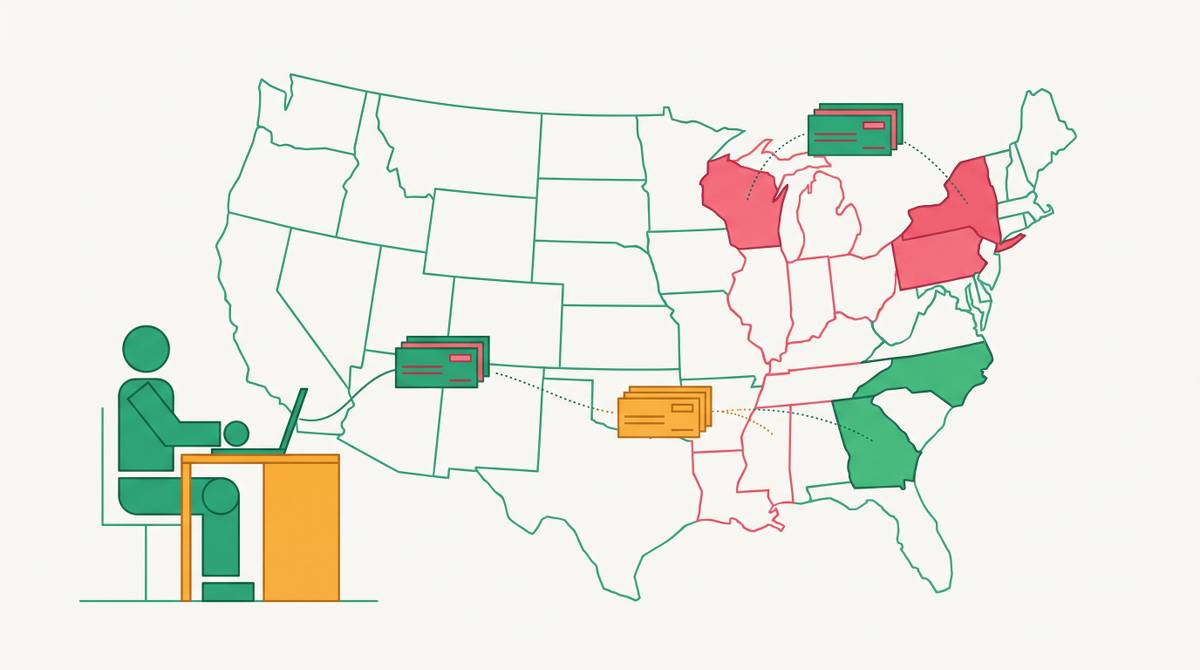
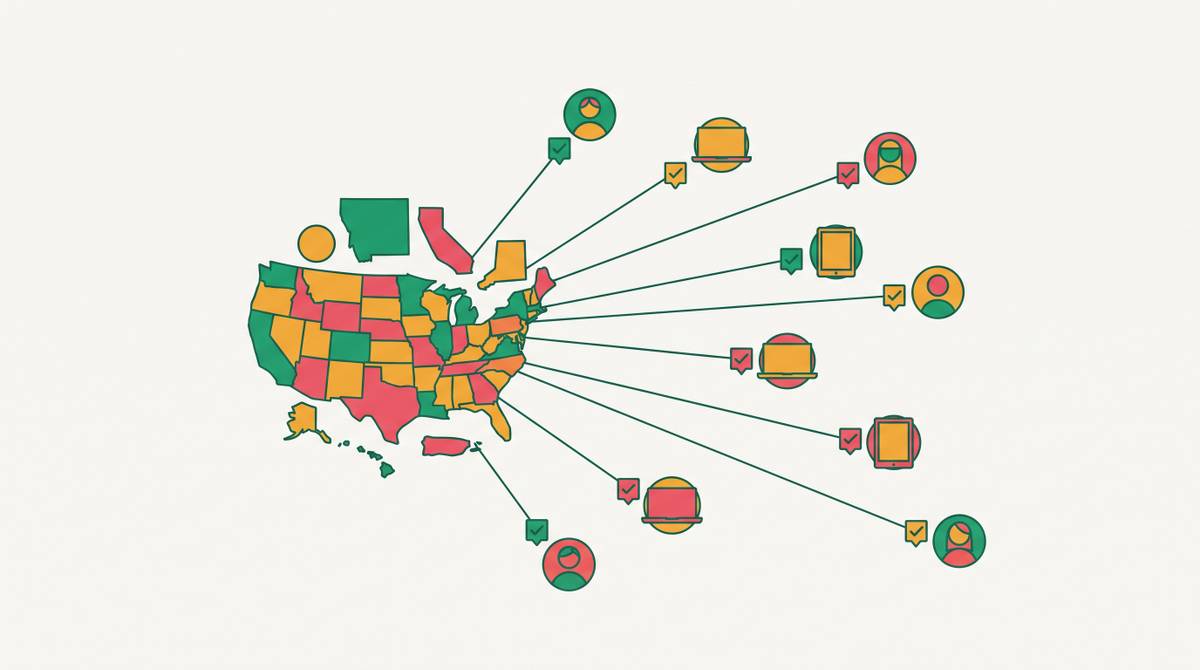
The federal threshold increase simplifies the federal filing picture. It doesn't simplify the state-by-state one. States set their own information return thresholds and are under no obligation to conform to the federal standard. Some states require a filing whenever state income tax has been withheld, regardless of the payment amount. Companies operating across multiple states need to verify each state's rules independently, because a contractor payment that falls below the new federal $2,000 threshold may still trigger a state filing obligation.
Worker classification is a separate matter entirely. The transition from $600 to $2,000 does nothing to resolve whether a worker is properly classified as an independent contractor in the first place. Issuing a 1099 is not a classification determination; it's a reporting action. A worker who should be classified as a W-2 employee does not become a contractor because they received a 1099.
In mid-2025, the U.S. Department of Labor suspended enforcement of the 2024 Independent Contractor Rule, reverting to prior guidance. Companies that had adjusted their classification practices to conform to the newer economic-reality standard now face ambiguity about which framework governs them. That ambiguity has direct legal and financial consequences: misclassification creates backdated payroll tax liability, exposure to employment law claims, and potential penalties that dwarf any 1099 filing issue.
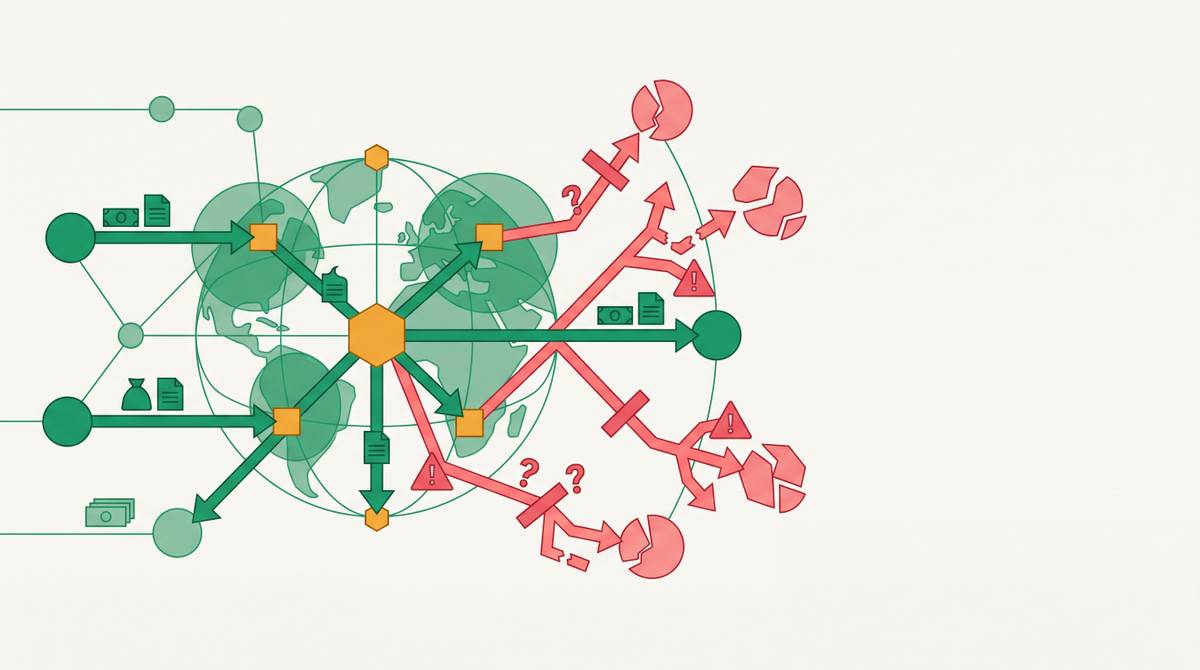
The international picture adds complexity for globally distributed teams. Contractor hiring has risen sharply across industries, while the EU Platform Workers Directive, Brazil's reclassification enforcement framework, and UK IR35 scrutiny are all tightening classification standards. A worker classified as an independent contractor for U.S. federal tax purposes may carry a fundamentally different legal status under the law of the jurisdiction where their work actually occurs.
How Contractor Volume at Scale Turns Reporting Requirements Into an Operational Problem
A company with dozens or hundreds of contractors across multiple states is not managing one filing. It's managing a matrix of federal thresholds, state-specific rules, classification statuses, payment timing across a calendar year, and the aggregate e-filing mandate that already applies to virtually any company with a real contractor workforce, Each variable is a point of potential error. At volume, those errors multiply.
Consider what manual management of this actually entails: reconciling contractor payment records against threshold triggers, verifying W-9 information and taxpayer identification numbers, catching threshold crossings mid-year before they become year-end surprises, tracking state-level obligations for each contractor based on where the work is performed. U.S. businesses pay over $7 billion annually in IRS penalties related to payroll tax compliance errors. The per-form penalty structure for 1099s means that volume multiplies risk in a direct, linear way. A company filing 500 forms with a 5 percent error rate is not dealing with a rounding problem; it's looking at potentially significant penalty exposure.
The new $2,000 threshold reduces the total number of filings required, which is a genuine operational benefit. It does not reduce the complexity of managing the filings that remain. A contractor paid $2,500 across two states still requires the same verification, classification review, and threshold tracking as they did before. The process doesn't simplify; the universe of affected contractors shrinks modestly.
What a Well-Run Contractor Compliance Process Looks Like in 2026
Collect W-9s before any payment is made. Not at year-end. Not at the time of the first invoice. Before the first payment. Missing or incorrect taxpayer identification numbers are the root cause of the majority of 1099 filing failures, and they're entirely preventable.
Track payments in real time against both the applicable federal threshold and each relevant state threshold. Year-end reconciliation is too late to catch threshold crossings cleanly, particularly when payment dates matter for determining which year's rules apply.
Maintain unambiguous records of payment dates. The distinction between a payment made December 30, 2025 and one made January 2, 2026 is the difference between the $600 threshold and the $2,000 threshold. That distinction needs to be preserved in payment records; it can't be reconstructed reliably at filing time.
For multi-state operations: map each contractor to the state or states where work is performed, not to the state where the company is headquartered. Multi-state payroll and information return compliance follows the location of the work, with limited exceptions. New York, Nebraska, and Delaware apply convenience-of-employer rules that can shift this analysis, but those are narrow carve-outs, not the general rule.
Verify contractor classification before issuing any 1099. The act of filing a 1099 does not insulate a company from reclassification liability. If the underlying classification is wrong, the form makes no legal difference.
Brief your contractors. Workers who won't receive a 1099 because their payments fall below the new $2,000 threshold still owe federal income tax on those earnings. Communicating this plainly is both practically sound and a reasonable expression of good faith toward the people you pay.
E-file whenever possible. If a company is above the 10-return aggregate threshold, and virtually every company with a real contractor workforce already is, electronic filing is not a recommendation; it's a requirement.
Why the Companies Most Exposed to This Are the Ones Growing Fastest
Scaling companies add contractors faster than they build compliance infrastructure. This is not a criticism; it's an accurate description of how growth works. A contractor roster that's entirely manageable at twenty people becomes a substantive operational surface at one hundred or two hundred, particularly when those contractors are distributed across multiple states or countries.
High-growth companies are disproportionately multi-state by design: remote hiring, expansion into new markets, and distributed contractor networks all multiply jurisdictional exposure simultaneously. Each new state where a contractor performs work is a new compliance variable. The federal threshold simplification does not reduce that exposure at all.
The DOL enforcement pause on the 2024 Independent Contractor Rule creates a particular risk for companies that made classification adjustments in response to the newer standard. Those decisions may warrant review. Reclassifying workers back and forth in response to shifting regulatory guidance is itself a source of legal exposure, and the current period of ambiguity rewards caution and documentation over speed.
The One Big Beautiful Bill Act reduces paperwork volume at the margins. It does not reduce the underlying complexity of tracking contractor payments, classification status, and state obligations across a growing, distributed workforce. The companies that treat 1099 compliance as a year-end task rather than a continuous process are precisely the ones most likely to encounter the penalty structure described in this piece: $340 per form, compounding across volume, with no ceiling on intentional disregard violations.
The operational answer is automation that monitors payment thresholds in real time, flags classification anomalies before they become liability, and files electronically without requiring manual intervention at each step. That's what converts contractor compliance from a recurring sprint into a background process. The law just changed in meaningful ways, and the operational discipline required to comply with it did not.