Remote Work Tax Implications for Employers
Hiring across state lines triggers immediate tax obligations employers often discover too late.

Roughly 22.5% of U.S. employees, about 36.9 million people, now work remotely at least part of the time. That figure has held between 17.9% and 23.8% since late 2022, a range that suggests this is a structural feature of the American labor market rather than a lingering pandemic effect. Tax codes were built for a worker who commutes to one building in one state, and that assumption is now wrong for a fifth of the workforce. Most employers still treat a remote hire in a new state as an HR event, when it actually functions as a fresh legal exposure that starts accruing the moment the offer letter goes out.
How a remote employee creates nexus, and what that obligates the employer to do
Nexus is the legal term for a connection between a business and a state substantial enough to give that state authority to tax it. For most of corporate tax history, establishing nexus meant something physical: an office lease, a warehouse, a salesperson knocking on doors within state lines. A remote employee working from a spare bedroom satisfies that same physical-presence standard, even when the employer has never signed a lease or opened a bank account anywhere near that employee's zip code.
Once nexus attaches, several obligations follow at once, not sequentially. There's the obvious one, state income tax withholding. But nexus can also expose the employer to corporate income or franchise tax, require registration for state unemployment insurance, and in some cases trigger sales tax nexus if the employee's role touches business activity beyond just doing the job from home. Most states treat nexus as effective from day one of employment. There is no grace period, no window to get paperwork in order before liability starts accruing.
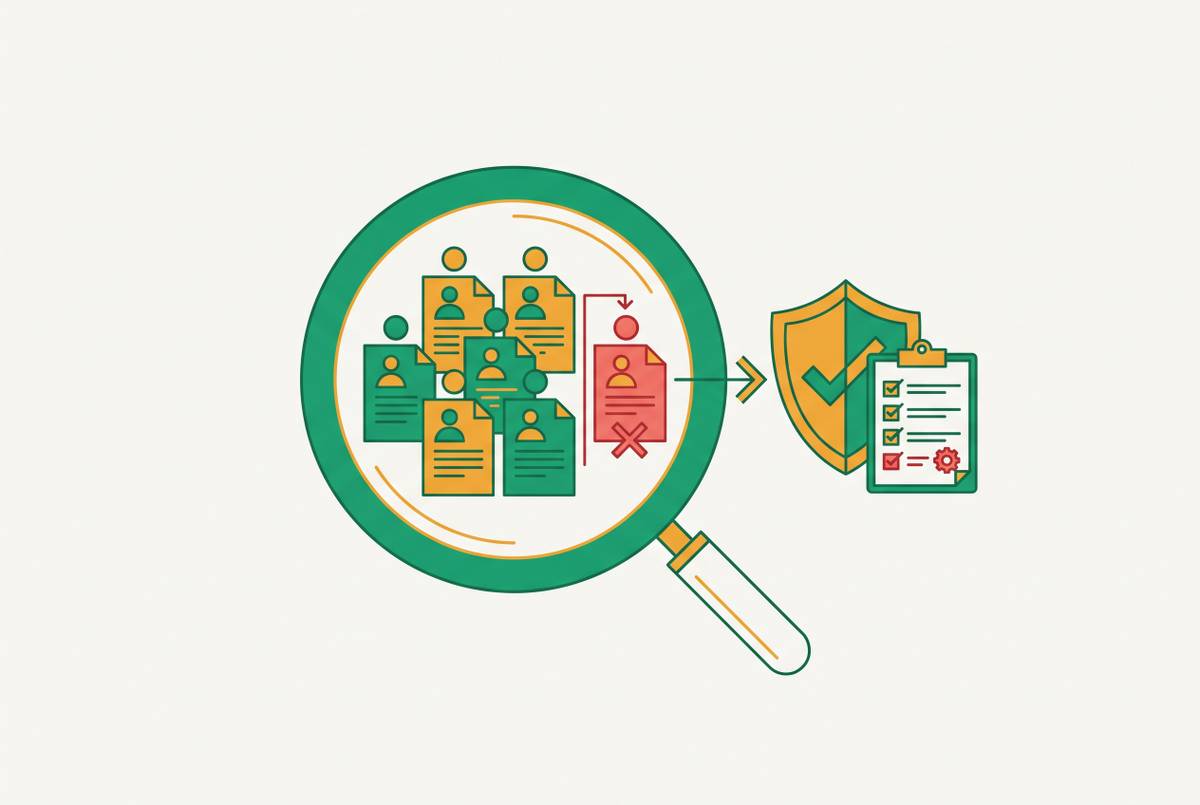
That timing gap is where employers get caught. Many don't discover they've created nexus in a state until they file a return, get selected for audit, or receive a notice in the mail, at which point back taxes, interest, and penalties have already been stacking quietly in the background. A company headquartered in Texas, a state with no income tax, hires one remote employee in New Jersey. That single hire immediately obligates the company to New Jersey withholding, New Jersey unemployment insurance registration, and potentially New Jersey corporate business tax, none of it a concern the day before the offer went out, all of it live the day after.
The withholding obligation that follows the employee's physical location, with important exceptions
The general rule fits in one sentence: income tax withholding follows wherever the employee is physically sitting when the work happens. Putting that into practice is where it gets complicated, because the employer has to register with that state's tax authority, secure a withholding account, and remit payments on whatever schedule that state sets, and those schedules are not standardized.
Unemployment insurance runs on similar logic, generally payable to the state where the employee physically works. New-employer SUI rates typically fall between 1% and 3.4%, but the wage base each state taxes against varies sharply, so two employees doing identical work in different states can cost meaningfully different amounts in payroll tax, purely as a function of geography.
There's a real strategic lever buried in this. Employees living in Alaska, Florida, Nevada, New Hampshire, South Dakota, Tennessee, Texas, Washington, or Wyoming generate no state income tax withholding obligation at all, because none of those states levy one. That belongs in workforce planning, not in a footnote.
Paid family and medical leave adds a newer, expanding layer on top. Colorado, Connecticut, Maryland, Massachusetts, New York, Oregon, Rhode Island, and Washington all require PFML contributions; Delaware joined in 2025, Wisconsin in 2024. Each program runs its own rate, its own wage base, its own remittance calendar. A company with remote employees spread across a dozen states is effectively running a dozen overlapping payroll processes, each with its own registration, filing cadence, and penalty structure for getting it wrong.
Ohio pushes this further than almost anywhere else. Employers there withhold not just at the state level but for individual municipal taxing jurisdictions inside Ohio, so a single Ohio hire can multiply the administrative surface well past what "one more state" usually implies.
The convenience of the employer rule, the exception that can override where work physically happens
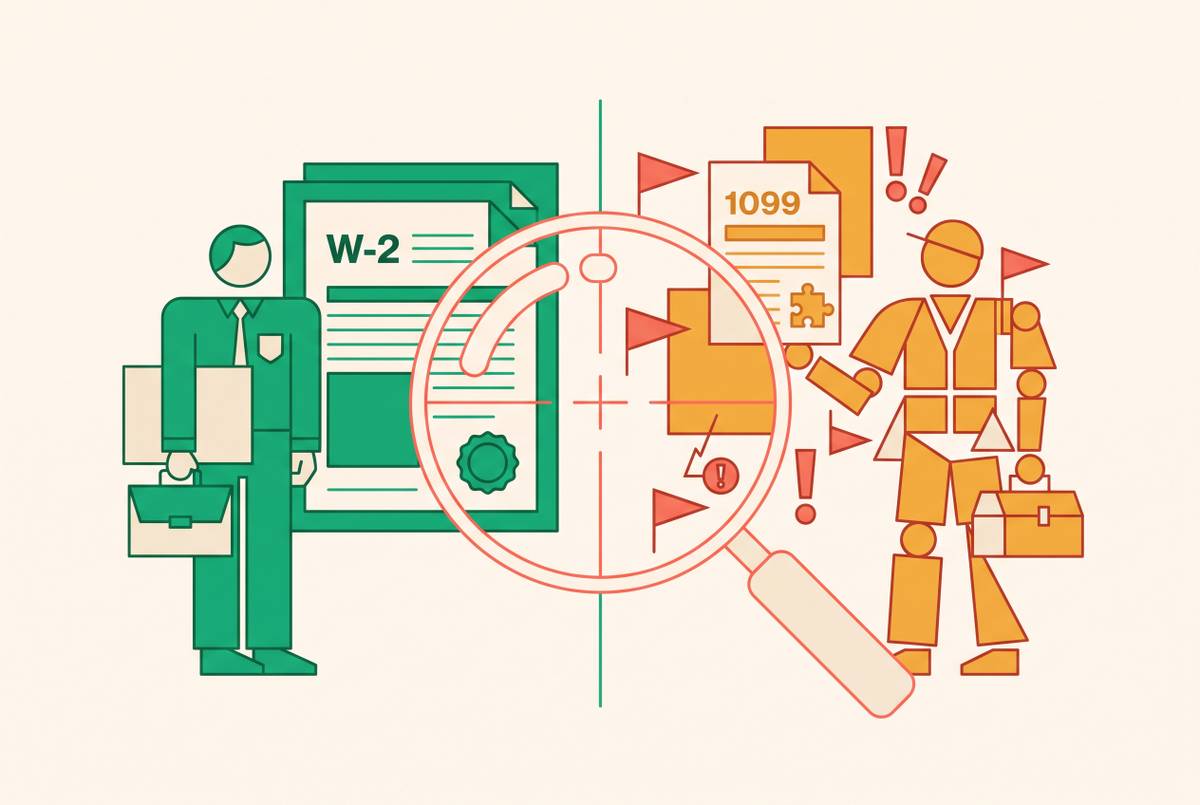
Six states, Arkansas, Connecticut, Delaware, Nebraska, New York, and Pennsylvania, apply what's called the "convenience of the employer" rule, and the logic runs against intuition. If an employee works remotely by choice rather than because the job requires it, the employer's home state can claim withholding rights over that employee's income even though the employee never sets foot there.
Take a software company headquartered in New York with an engineer working full-time from Colorado. Under the convenience rule, that company may owe New York withholding on the engineer's wages in addition to whatever Colorado requires, purely because New York decides the remote arrangement was chosen for the employee's convenience rather than dictated by business necessity.
New York enforces this more aggressively, and more visibly, than any other state on the list. Its Tax Appeals Tribunal reaffirmed the rule in 2024 and 2025, rejecting arguments that pandemic-era remote work should count as employer-mandated and therefore exempt. The state's working assumption is blunt: if the job could have been performed at the employer's New York office, the remote arrangement is presumed to exist for the employee's convenience, and New York tax applies regardless of where the laptop actually sits. Telling the state "we let people work from home" carries no legal weight on its own. What actually matters is documented policy, something in writing that distinguishes remote work the business required from remote work the employee simply preferred, because that distinction is what decides who owes what.
Left unaddressed, this produces genuine double taxation: an employee in a convenience-rule state can end up owing income tax to both the resident state and the employer's state, with no relief unless the two states happen to have negotiated a reciprocity agreement. Most haven't.
Reciprocity agreements and safe harbors, where relief exists and where it doesn't
Reciprocity agreements exist between certain pairs of states and let an employee pay income tax only to the state of residence, rather than to the state where the work physically happens. Where these agreements exist, they genuinely simplify life: they eliminate dual withholding for cross-border commuters and keep employees from paying the same tax twice.
The relief is narrower than it sounds. Reciprocity is bilateral by definition, so it only exists between specific pairs of states that have actually negotiated it, and most pairs haven't. Even where an agreement is in place, it typically covers income tax withholding alone. It does nothing for unemployment insurance, PFML, or local taxes layered on top.
Safe harbor thresholds are the other relief valve, and they're evolving unevenly. Nebraska's L.B. 1023, effective April 2024, set a genuine de minimis standard: employers don't have to withhold unless an employee works more than seven days in the state or earns more than $5,000 in wages there, whichever hits first. The National Taxpayers Union Foundation tracks this kind of safe harbor legislation across states, though coverage stays patchy. Most states still have no threshold at all, which means a single day of work can trigger a withholding obligation somewhere that hasn't adopted any safe harbor language.
The value of reciprocity and safe harbors depends entirely on active tracking of which states offer what, because a safe harbor that protects an employer in Nebraska does nothing in New York, and the map shifts from one legislative session to the next.
The post-COVID correction problem, and why many employers are still carrying hidden liability
2020 forced a compliance emergency nobody had time to prepare for. Workforces went remote in weeks, often with no chance to register in new states, reconfigure payroll systems, or run a real nexus analysis before the first paycheck went out. States, recognizing the chaos, offered temporary nexus relief during the pandemic. Much of that relief has since expired, often without much public notice, and that's the part employers keep missing.
Businesses that leaned on temporary pandemic relief and never went back to formalize a real compliance posture may have been out of compliance for years, quietly, with no single event forcing the issue into view. Employers who unknowingly withheld the wrong amount, or paid taxes to the wrong state, may still have a path to remediate the error, but that path generally requires the mistake to have been innocent rather than a case of willful neglect.
The window to fix this isn't indefinite. States operate under statute-of-limitations periods, but interest keeps accruing on unpaid amounts the entire time, and voluntary disclosure programs, where states offer them, generally require the employer to come forward first rather than wait to get caught. In practice, the trigger often looks like this: an employee files a resident-state return reporting wages that don't match any withholding on record, and the state follows up directly with the employer. Companies that hired aggressively across new states in 2021 and 2022, without ever circling back to audit their own payroll setup, are the ones most likely carrying exposure across several states right now.
How the compliance burden compounds as a workforce grows across more states
Every additional state an employee works from adds its own registration, its own unemployment insurance account, potentially its own PFML program, and its own calendar of filing deadlines and deposit schedules. None of that is a one-time setup cost. It's a recurring obligation that has to be maintained indefinitely, which is exactly what makes it easy to underfund.
Errors are already common before state complexity even enters the picture. A 2022 Ernst & Young survey found that roughly one in five payroll cycles contains an error, at an average cost of $291 per mistake. For a company running biweekly payroll, that alone works out to at least $1,500 a year in avoidable cost, before a single state-level penalty enters the picture.
Manual tracking doesn't scale against this, and treating it as though it can is the mistake most companies actually make. There are thousands of tax jurisdictions across the country once states, counties, and municipalities are all counted, and monitoring that by hand is a bet that nothing changes while nobody's watching. Ohio's municipal tax layer is the clearest illustration of how local complexity multiplies past what a spreadsheet can reasonably hold.
Enforcement isn't standing still either. Available data shows regulatory fines jumped 417% in the first half of 2025 compared to the same period in 2024, reaching $1.23 billion across 139 penalties. Adding headcount to solve this doesn't work at scale: even a skilled payroll specialist can't personally monitor every jurisdiction, catch every rate change, and guarantee accuracy across dozens of separate state accounts at once. Rates move, wage bases update, new PFML programs launch, safe harbors get revised. Each new remote hire in a new state doesn't close out as a finished task; it opens an ongoing one.
What an employer actually needs to have in place, and where automation changes the equation
A baseline compliance setup for a multi-state remote workforce needs several things running at once, not in sequence. There has to be a real process for tracking where each employee actually works, accounting for where they're sitting month to month as circumstances change rather than relying solely on the address on file from the hire date. State tax registration has to exist in every jurisdiction where nexus has been created. Withholding calculations have to correctly account for convenience-rule states and whatever reciprocity agreements apply. Unemployment insurance and PFML accounts have to be registered and funded accurately, state by state, and someone, or something, has to be watching for legislative change before a filing deadline arrives, not after.
That list is manageable for a company operating in five or six states. It stops being manageable somewhere past 20 or 30, not because the individual tasks get harder, but because there are simply more of them running in parallel than a manual process can reliably hold together.
Manual compliance was never going to survive that scale, and pretending otherwise is the real risk most growing companies are carrying. This is where AI-native payroll infrastructure earns its place. Automated nexus detection flags that a new hire's location creates a fresh state obligation before the first paycheck runs, not months later during a filing cycle. Continuous jurisdiction monitoring tracks rule changes across states and municipalities without requiring a human to read every state tax bulletin as it publishes. End-to-end account setup means state tax accounts and SUI registration happen inside onboarding itself, sparing teams the manual task that otherwise gets queued up and forgotten. Platforms like Warp build this directly into payroll, handling multi-state withholding, SUI registration, and PFML contributions across all 50 states while tracking jurisdiction-specific rules, so finance teams aren't manually reconciling conflicting state schedules or finding out about a compliance gap only after the audit letter arrives.
For a company scaling from 50 employees to 500 across dozens of states, that kind of infrastructure functions as the foundation that lets headcount grow at all, without every new hire quietly adding to a pile of legal exposure nobody's tracking.