Automated Payroll and Compliance Management at Scale
Manual payroll breaks down at scale; automation closes the compliance gap.
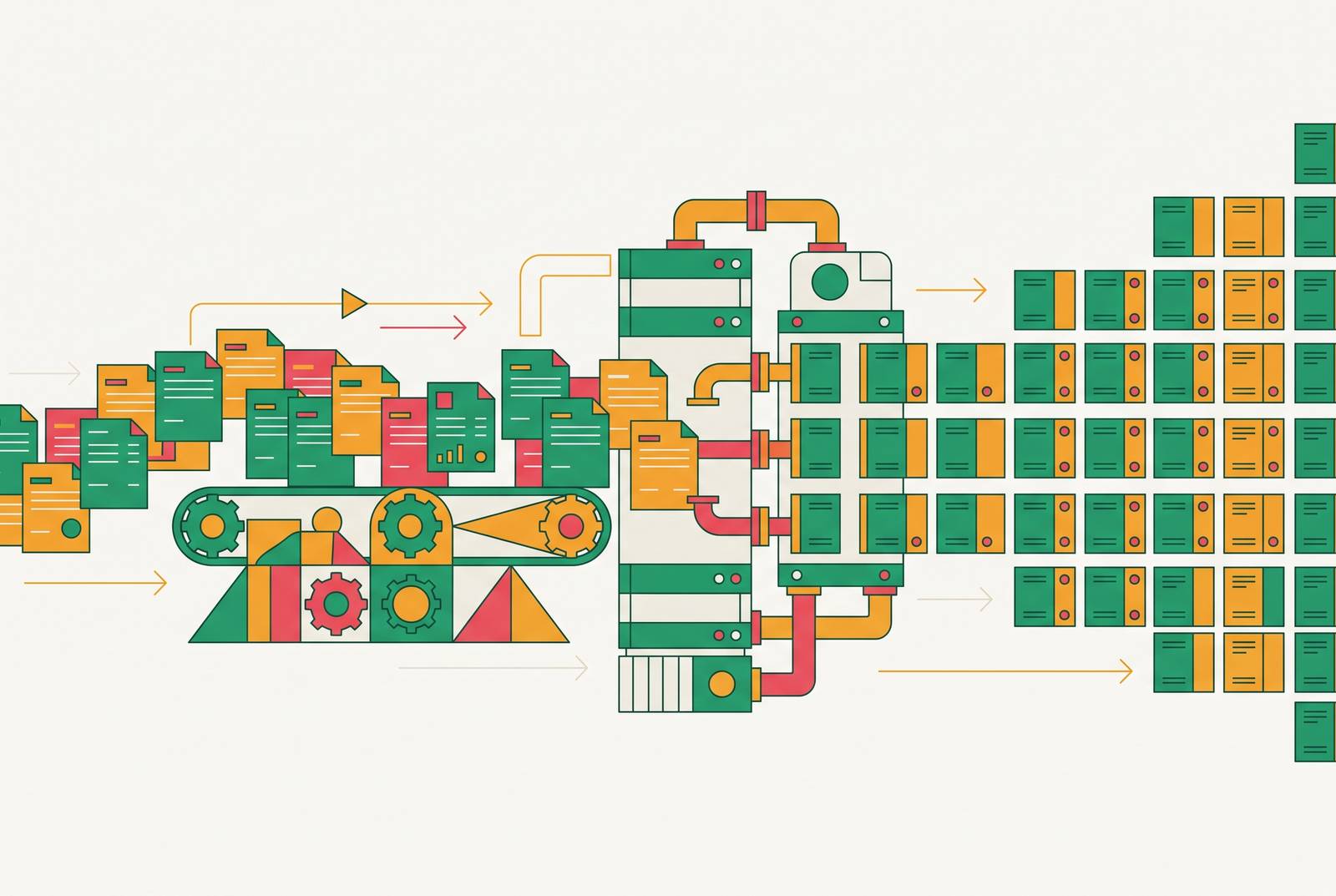
Payroll looks like a solved problem from a distance: run the numbers, cut the checks, file the forms. Close up, it behaves more like a compounding equation, where every new hire in a new state or country adds a variable that interacts with all the others. This piece traces what happens when manual payroll operations scale past the point where a spreadsheet and a good memory can hold the whole system together, and what an automated platform actually has to own to close the gap.
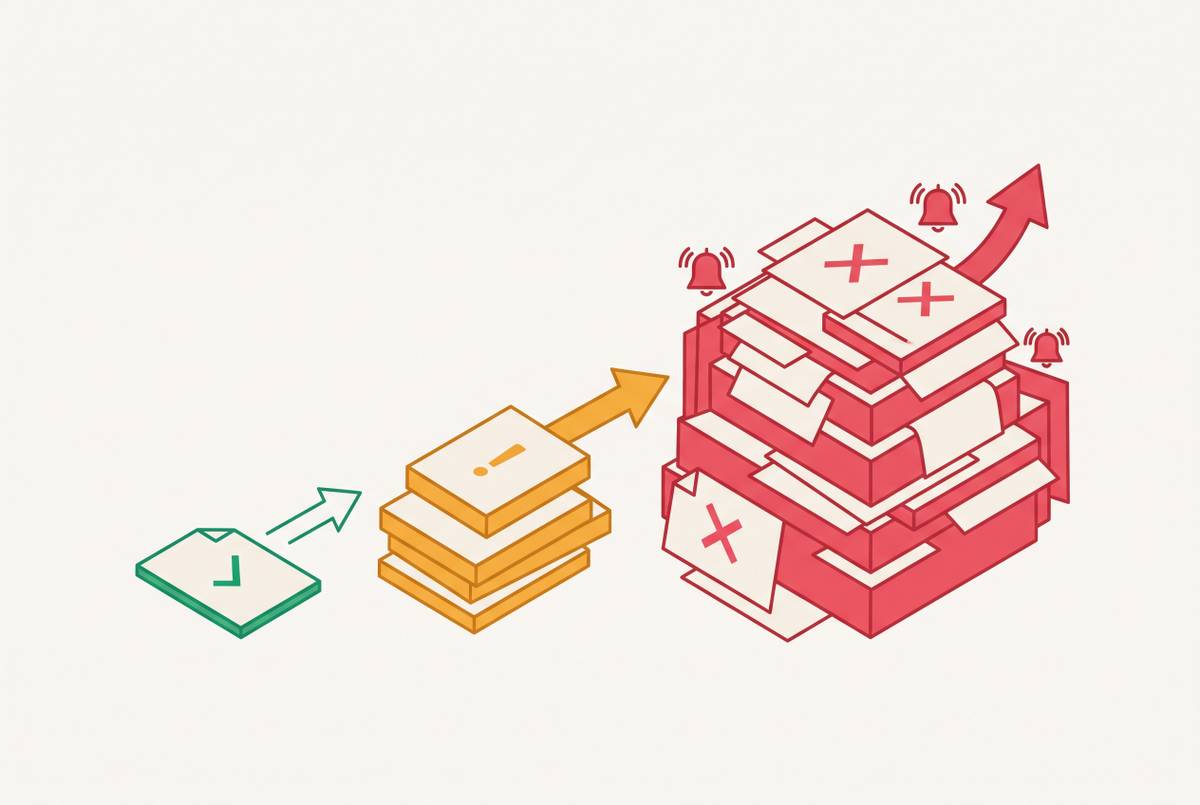
The intuitive assumption fails quietly at first. A company with fifty employees in one state runs payroll the same way every two weeks, and the process looks repeatable because it is. Add a second state, then a third, then a handful of contractors overseas, and the process stops being one process. It becomes dozens of adjacent processes, each with its own tax profile, its own labor law, its own filing calendar, stitched together by whoever on the team happens to remember how the last exception got resolved. That knowledge rarely lives in a document; it lives in a person, and when that person leaves or the payroll team stays lean while headcount climbs, the institutional memory walks out the door with them. Staff capacity grows in a straight line, while compliance surface area does not.
What payroll errors actually cost per incident and per year
Start with frequency, because the baseline is worse than most operators assume. Roughly one in five payrolls in the U.S. contains an error, according to EY's 2022 research, which makes error a standing condition of the process rather than an occasional failure.
Each incident carries a cost, and that cost is not trivial. EY put the average fully loaded cost of a payroll error at $291 in 2022; for enterprise operations juggling more complex rule sets, that figure climbs to $390, and extreme cases run as high as $705. The dollar figure only tells part of the story, though. Correction time is the hidden multiplier: a median error eats three to five hours of staff time to fix, and the nastier cases, retroactive corrections or tax recalculations, can run significantly longer.
Multiply that across a real workforce and the picture gets uncomfortable fast. A 1,000-employee organization spends an aggregate of 29 workweeks a year just fixing the most common error categories, per EY's 2022 findings, and time/attendance and expense errors alone cost $250,000 per 1,000 employees annually. The average organization processes 15 corrections per payroll period, a volume that suggests the correction cycle functions as a second, parallel workflow running underneath every pay period. Taken together, error costs eat between 2% and 5% of total annual payroll spend, and at mid-market scale that is a real drag on margin.
The IRS penalty structure and how quickly fines escalate
The IRS penalizes nearly one in four businesses for payroll mistakes, so getting flagged is closer to normal than exceptional. What makes this dangerous is how fast the penalty schedule escalates once a deposit is late. Under the IRS's tiered penalty structure, late deposits draw escalating penalties that climb steeply the longer a liability goes unresolved, reaching as high as 15% for amounts still unpaid after an IRS notice. There's a separate failure-to-file penalty on top of that, which accrues monthly and carries its own cap.
At the incident level, a late or incorrect payroll tax filing carries an average fine of $1,100 per employee, and running that across a workforce of any size means the exposure carries real operational weight. Businesses paid $2.8 billion in payroll penalties in 2024 alone, and the IRS estimates that 40% of small to mid-sized U.S. businesses pay a payroll penalty in a given year. Add W-2 and 1099 penalties, up to $330 per form in 2025, with intentional disregard carrying even steeper exposure, and the tax-season paperwork becomes its own liability category.
There's a personal dimension here that operators tend to underweight. Certain IRS enforcement mechanisms extend the risk beyond the business balance sheet, reaching individuals within the organization. Enforcement is not softening, either: penalty totals surged 417% in the first half of 2025 compared with the same period in 2024, reaching $1.23 billion across 139 penalties, according to Fenergo's 2025 figures. A single missed deposit deadline, left unresolved, can trigger a cascade of escalating penalties that dwarfs whatever the original clerical error would have cost to fix.
The downstream damage payroll errors do to the workforce itself
Employees do not tolerate payroll mistakes the way operators sometimes assume they will. Research from UKG's Workforce Institute found that 49% of employees will start looking for a new job after just two incorrect pay cycles, which means payroll accuracy functions less like an HR nicety and more like a retention lever.
Trust erosion compounds the problem before anyone resigns. Roughly a third of employees who experienced a payroll mistake said it decreased their trust in the employer or made them more cautious about the relationship, per Remote's 2024 Global Payroll Report findings. Put a dollar figure on what that trust erosion becomes once it turns into attrition: for a 1,000-employee organization, payroll-error-driven turnover runs an estimated $466,354 to $1,865,416 a year. At 2,000 employees, that range climbs to $932,708 to $3,730,832, and that's before counting the indirect costs of lost productivity and disrupted teams.
The organizational fallout goes beyond turnover. EY's 2022 research found that more than 40% of organizations facing payroll-related litigation resort to cutting jobs, and more than half of those facing regulatory and compliance issues do the same. Forty-one percent report declines in employee morale, and 36% report reputational damage. The mechanism is cyclical: errors create rework, rework delays payroll, delays erode trust, eroded trust drives turnover, and turnover pulls institutional knowledge out of the building, which makes the next error more likely. For a company trying to scale headcount quickly, that cycle is particularly corrosive; losing people at the wrong moment can stall hiring momentum that took months to build.
Why multi-state and global expansion multiplies every compliance risk
Multi-jurisdiction employment is the default now, not the exception. Remote and hybrid work has become the default operating model across much of the economy, which means the payroll team is very likely managing employees across state lines even if the org chart doesn't say so explicitly.
Every new jurisdiction brings a distinct combination of labor regulations, social contribution requirements, filing deadlines, and deposit schedules, and none of those pieces move in sync with each other. Domestically, that means 50 states, each with its own income tax rules, unemployment insurance requirements, and deposit schedules, layered with cities and counties that add their own local levies on top. Internationally, the variables multiply again: social contributions, withholding regimes, contractor classification rules, and currency handling all differ by country, sometimes by region within a country.
Research consistently identifies local compliance as the single biggest global payroll challenge, and a minority of organizations have a formalized global payroll strategy in place. That means the majority are either improvising as jurisdictions get added or haven't built a strategy at all. No human team can hold thousands of active tax jurisdictions in working memory while keeping pace with every rule change; the compliance load is too dynamic and too distributed for manual tracking to keep up. In practice, a single employee relocating across a state line, or a contractor picked up in a new country, can open filing obligations a manual process won't catch for months.
Where manual compliance processes specifically fail at scale
Six failure points show up again and again once a company crosses a handful of jurisdictions.
Tax account registration is the first. New state tax accounts have to be opened the moment a company hires in a new state, and manual processes routinely lag behind that requirement, generating late-registration penalties before a single payroll run has even happened.
Classification is the second, and it's one of the costliest mistakes to make. Misclassifying an employee as a contractor, or the reverse, is easy to do and painful to unwind, especially once the misclassification has persisted across several jurisdictions and several pay periods.
Deposit timing is the third. Deadlines vary by jurisdiction, and they shift depending on payroll frequency and liability threshold. A calendar built by hand cannot adapt fast enough the moment a company crosses a new threshold mid-year.
Notice resolution is the fourth. IRS and state agency notices require a timely, accurate response, and organizations without dedicated compliance staff often let notices sit in an inbox, which is exactly the condition that lets the earlier penalty schedule escalate from 2% to 15%.
Benefits and payroll alignment is the fifth. When benefits elections change, new enrollments, qualifying life events, terminations, the changes have to cascade correctly into payroll deductions. Disconnected systems create chronic mismatches between what a system of record says an employee elected and what actually comes out of their paycheck.
Offboarding is the sixth, and it's underrated. Final pay rules vary by state, some require same-day payment on termination, and manual processes miss these often enough that final-pay violations are a frequent source of wage and hour complaints.
There's a governance data point worth sitting with. UKG and KPMG's research found that 89% of organizations say they use automated payroll comparison tools, and 69% track payroll accuracy. Yet only 35% measure first-time-right payroll, and many organizations skip granular cost metrics entirely, leaving key dimensions of payroll leakage unmeasured. The gap matters: organizations believe they're monitoring compliance health, but they're watching lagging indicators, the aftermath of errors, not the metrics that would reveal where the leakage is actually happening before it compounds.
What end-to-end automation actually owns versus what it just assists with
Most payroll software marketed as "automated" reduces manual effort, while a smaller category of systems removes the human-in-the-loop step entirely for defined categories of work. The distinction between those two things is the whole ballgame.
The assistance model surfaces anomalies, flags issues, and generates reports, but a person still has to review the flag and act on it. Error rates drop under this model, but the underlying compliance dependency on human attention never actually goes away; someone still has to notice the flag and close the loop.
The ownership model works on a different mechanism. The system detects the condition, executes the correction, and closes the loop on its own, with no human queue and no action required unless the system hits an exception it genuinely cannot resolve. Agentic AI enables this in ways rule-based automation historically could not: detecting anomalies before a payroll run even begins rather than after the damage is done, resolving routine exceptions autonomously within defined guardrails, monitoring the connection between ERP and payroll systems continuously instead of in scheduled batches, and updating payroll, benefits, and IT access all at once when an employee's status changes, so the systems stay synchronized without someone manually reconciling three platforms by hand. These systems also learn from errors they've already caught, so similar conditions get flagged proactively in future cycles instead of repeating.
Zero-touch payroll is becoming the operational benchmark here. What traditionally required numerous manual steps, AI systems now handle from data collection straight through to final payout, saving companies an estimated 40% to 80% of time spent on payroll operations. AI-powered systems can substantially reduce data-entry errors, and by 2025, AI agents are expected to handle 60% to 70% of payroll-related employee questions, volume that would otherwise require a dedicated HR headcount just to field.
None of this should be oversold, though. AI adoption in production payroll environments sits at 47%, even among large enterprises, per UKG and KPMG's research. The two most common barriers cited are concerns about data accuracy, at 48%, and integration gaps. Both are architecture problems with known solutions, not fundamental limits baked into the technology.
What a consolidated, automated payroll and compliance platform must cover
Most companies scaling headcount arrive at the same patchwork: one tool for payroll, another for benefits, another for the HRIS, another for IT provisioning, each syncing on its own schedule and each carrying its own error surface. When none of these systems share a single source of truth, every employee status change turns into a reconciliation exercise across multiple platforms, done by hand, on a deadline.
A platform built to genuinely own compliance covers a specific set of ground. Multi-state payroll across every U.S. state, with automatic tax account registration triggered the moment a company hires in a new state. Contractor payments across international jurisdictions, with correct classification and local withholding handled without manual intervention. Continuous monitoring of tax jurisdiction changes, not a quarterly update pulled from a compliance newsletter, but a live feed. Automated benefits enrollment and deduction alignment, so payroll always reflects whatever an employee most recently elected. Compliance notice detection paired with actual resolution, meaning the system responds to IRS and state notices directly instead of routing them into a human queue where they can sit and escalate. Onboarding and offboarding handled as one coordinated event, IT provisioning, benefits enrollment, and payroll activation happening together, rather than three sequential tasks with lag built into the handoffs.
BCG estimates the prize at $25 to $50 billion in potential annual savings globally from compliance automation, most of it currently leaking out through manual and fragmented operations. For an operator evaluating platforms, most software on the market automates payroll to some degree; the sharper question is whether a given platform removes the human-in-the-loop step for the compliance workflows that currently sit, unresolved, in someone's inbox.
How to assess whether your current payroll operation is actually under control
There's a false confidence problem worth naming directly. Organizations that track payroll accuracy and run automated comparison tools often assume they have the system under control, but UKG and KPMG data shows only 35% measure first-time-right payroll and fewer than half track cost per payslip, the exact metrics that would reveal real leakage rather than confirming that a report got generated.
A handful of diagnostic questions surface the actual exposure. How many corrections does the team make per payroll period, and is anyone tracking that number over time? What's the lag between hiring in a new state and getting a state tax account registered? When did the team last get a compliance notice, and how long did it sit before anyone resolved it? How many separate systems does a single employee status change touch by hand? What actually happens to final pay when someone is terminated in a state that requires same-day payment?
AI adoption in HR functions jumped from 26% in 2024 to 43% in 2025, and companies that delay adopting these systems are not holding steady; they're falling behind peers who have already started eliminating the manual workflows responsible for the costs traced throughout this piece. For any company running payroll across multiple states and paying international contractors through a stack of disconnected tools, the relevant question is straightforward: what would a single platform that owns each of these workflows end-to-end actually cost, set against the penalty, correction, and turnover costs the current operation is already absorbing, quietly, every pay period.