Payroll Audit Preparation for Scaling Companies
Scaling companies inherit payroll errors from disconnected systems, not careless people.
A payroll audit is usually described as a documentation exercise: pull the records, match the numbers, explain the gaps. That framing misses what the audit actually tests. The scramble that finance leaders recognize, chasing managers for timesheets, reconciling two systems that don't agree, assembling a paper trail after the fact, is a symptom of how the underlying system was built, and it will recur at every audit until the system itself changes.
The errors that show up in audit findings, misclassified workers, incorrect withholdings, unsupported deductions, inconsistent overtime math, rarely trace back to a single careless entry. Research published in 2026 identifies repeated payroll errors as compounding risks in their own right: a pattern of even minor mistakes raises audit and legal exposure precisely because the pattern signals a process failure, not a one-off slip. Paycom's 2026 analysis names the usual suspects directly: a lack of smooth data flow between time tracking, benefits enrollment, and payroll, combined with manual timekeeping, disconnected systems, and weak data validation. Payroll errors mostly start upstream, and they reach the payroll team already wrong, carried forward from a timesheet, a benefits form, or a tax election that was never reconciled against the system of record.
This distinction carries real weight for a company that's scaling. At ten or twenty employees, a person reviewing the payroll run before it goes out can catch most upstream mistakes by eye. At a few hundred employees spread across multiple states, the volume and variation have outgrown what manual review can catch, so that same review is bound to miss something every cycle. An audit, at that point, is the moment the gap between the system's design and the company's size becomes visible to someone with the authority to act on it.
Disconnected systems and the structural inevitability of payroll errors at scale
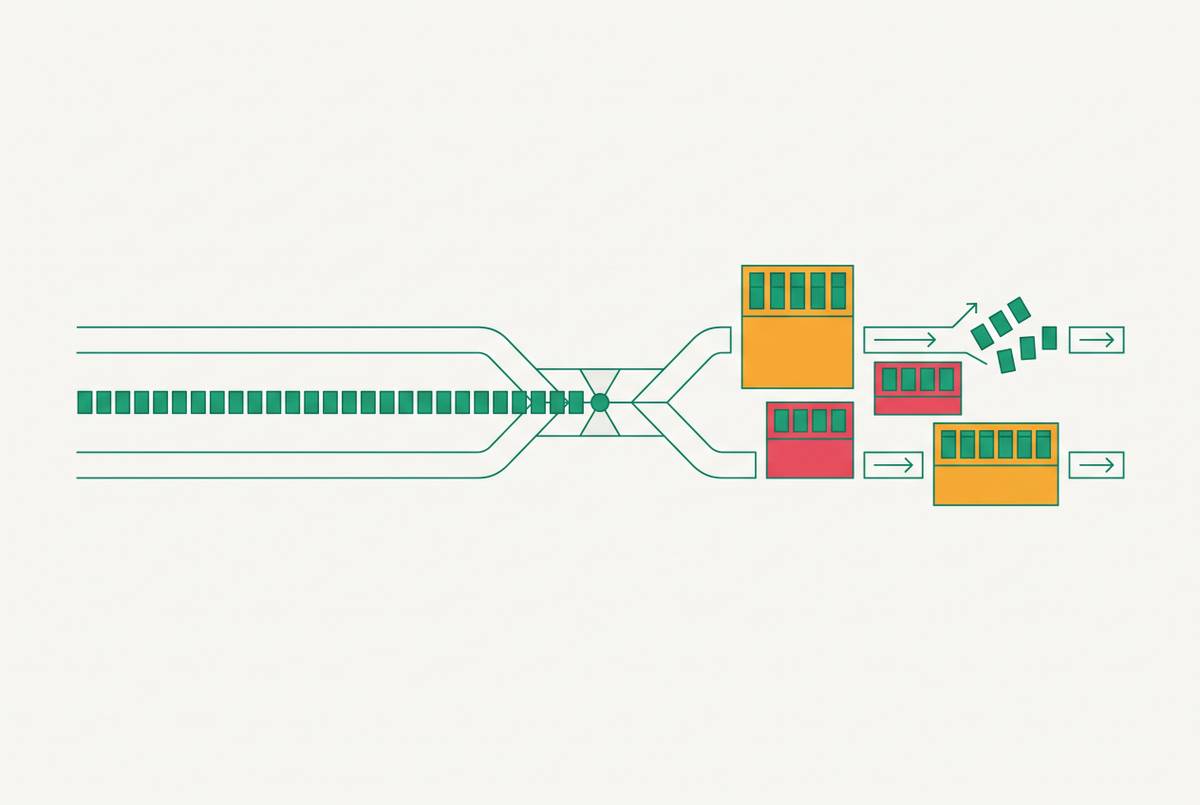
Payroll error is often treated as a people problem: someone typed the wrong number, someone forgot to update a record. The deeper issue is architectural. A payroll setup that works fine at a small headcount becomes a growing liability as the company scales, because the error rate is tied to how many times data has to move between systems that don't talk to each other, not to how careful any one person is.
Industry studies put the number directly: roughly one in five payroll cycles contains some form of error, and the consistent root cause is time-tracking and data-entry mistakes caused by manual re-entry between disconnected systems. Separate research backs this up from another angle, finding that most organizations store employee information across multiple HCM databases, and most of those organizations can't effectively share employee data between those platforms. Every point where a number has to be manually carried from one system to another is a point where it can be mistyped, misread, or dropped.
The most common and costly version of this appears in hours and punches. When time data can't flow to payroll automatically, someone has to re-enter it by hand, and that re-entry introduces error right at the source of every paycheck calculation, before any of the downstream math even starts. Tax withholding carries its own version of the problem, and a harder one to fix with manual effort: managing federal, state, and local tax obligations across multiple employee locations takes jurisdiction-specific logic that a person checking a spreadsheet cannot reliably apply once the company operates in more than a handful of places, as Paycom's 2026 analysis lays out in detail.
None of this stays contained to the original mistake. CoAd's 2026 analysis notes that a single incorrect paycheck sets off back pay or recovery costs, employee dissatisfaction, possible compliance violations, and extra administrative work, and every one of those consequences has to be documented. That documentation then becomes its own audit finding if it isn't handled cleanly. What started as one bad data point multiplies into a chain of corrective work, and an auditor's questions bring that chain into view. In a system built this way, adding headcount makes the error rate rise faster than a straight line. It compounds, because every new employee adds another set of manual touchpoints where the same failure can recur.
What accumulated payroll errors cost a scaling company
The cost of a payroll error is rarely measured correctly if it's measured one correction at a time. The real cost is cumulative: a system that produces mistakes on an ongoing basis, many of which sit uncorrected until an audit forces someone to reckon with all of them at once.
Research from EY puts a figure on correcting a single payroll error, a number that covers only the fix itself and nothing downstream. Scaled across a growing workforce, that figure puts the annual cumulative correction cost for a mid-size organization into the hundreds of thousands of dollars. The same research finds that most organizations lose a meaningful share of total payroll spend every month to errors and inefficiencies, so this is a recurring drain, not an occasional write-off.
Compliance penalties sit on top of that correction cost as a second layer. Paycom's 2026 analysis shows that failing to pay legally required overtime can bring fines and other compliance penalties, and those costs only appear once enforcement catches what the payroll process already missed. Tax withholding errors carry a different kind of exposure: IRS penalties attach to the underpayment mechanically and automatically, regardless of whether the mistake was intentional, and CoAd's 2026 analysis identifies repeated errors as a specific driver of higher audit and legal risk.
The least visible cost appears nowhere on an invoice. When audit pressure forces correction of payroll patterns, it pulls finance and HR leadership into remediation work instead of strategic priorities, and that displaced time is a real cost at every scaling milestone, even though no line item captures it. Dollar figures establish how serious the exposure is, but the deeper issue is what happens when a company operates across more than one set of rules at once.
Multi-state and multi-jurisdiction payroll compounds every existing risk
Geographic expansion is usually treated as a payroll volume problem: more employees, more paychecks, more of the same work. In practice, every new state or jurisdiction a scaling company enters brings its own compliance logic, its own filing calendar, and its own penalty structure, and a manual or fragmented payroll system cannot absorb that complexity without generating new categories of audit risk.
Minimum wage rates, overtime thresholds, required deductions, and local tax obligations all vary by jurisdiction and change on their own legislative schedules, independent of each other and independent of the company's internal calendar. Those obligations have to be tracked and applied at the payroll level itself, not just noted somewhere in an HR policy document that nobody checks against the actual pay run.
Worker misclassification is the highest-exposure risk on this list. A worker correctly classified as a contractor in one jurisdiction may meet the legal definition of an employee in another, and if that happens, misclassification brings unpaid payroll taxes, benefits liability, and back wages stretching across the entire period the misclassification was in effect. Enforcement in this area is active: the U.S. The Department of Labor's January 2026 release reports that it recovered more than $259 million in back wages for workers in 2025, the highest recovery since 2019, covering nearly 177,000 employees nationwide. That level of recovery shows a regulatory environment paying close attention to pay practices, and if a scaling company operates across multiple states, it's increasingly likely to come under that same scrutiny.
The deeper problem here is a mismatch in speed: regulatory changes at the state and local level happen faster than any manual compliance tracking process can reliably absorb, not a lack of knowledge about the rules. If a payroll system depends on a person applying jurisdiction-specific rules by hand, it will always be behind the regulatory calendar, because the calendar doesn't wait for the next manual review cycle. Pay transparency rules add another layer on top of this. Multiple U.S. states and local jurisdictions already require salary range disclosure, pay equity reporting, or both, and each of these obligations carries its own documentation and audit-trail requirements. You have to build those requirements into payroll and HR data systems directly, not handle them afterward as a separate reporting task bolted onto the existing process.
What audit-ready payroll infrastructure looks like in practice
Audit-readiness isn't a set of documentation habits layered on top of payroll after the fact. When a payroll system is designed well, every pay cycle produces complete, accurate, reconciled records, and no one has to assemble them by hand after the work is done.
That starts with a single source of truth for employee data. When employee records, time data, deduction elections, and tax withholding logic all live inside one system, the audit trail is simply what the payroll system produces as a matter of course, not something reconstructed from five different sources under deadline pressure. Pre-run validation is the next layer: catching a discrepancy before payroll runs is a quality control step, while catching the same discrepancy after the fact, through an auditor, is a finding. The distinction comes down to whether the system is set up to look for problems before the pay cycle closes or only after.
Jurisdiction-specific compliance logic has to be built into the system itself rather than applied by someone checking a spreadsheet by hand. Paycom's 2026 analysis treats consistent tax automation across federal, state, and local obligations as a prerequisite for compliance, not an optional upgrade, and for good reason: manual approaches to multi-jurisdiction tax calculation produce errors at a rate that's structurally predictable given enough states and enough pay cycles. Systems built to monitor regulatory changes and apply updated rules automatically close the lag between a new regulation taking effect and that regulation showing up correctly in a paycheck, and most multi-state compliance failures start in that lag.
The most advanced version of this design hands entire workflow steps to automated agents that own the process end-to-end, opening state tax accounts, resolving compliance notices, applying updated withholding tables, without a human touchpoint in the middle. Removing that human-in-the-loop step removes the exact place where errors are most commonly introduced and where audit trails most commonly break down.
Continuous audit-readiness and the relationship between payroll operations and company growth
Companies that build payroll infrastructure for continuous audit-readiness get more than fewer penalties out of the investment. They remove payroll compliance from the list of things that slow down hiring, expansion into new states, and financing events, which is a different and larger outcome than simply passing the next audit cleanly.
Due diligence in a financing round or an acquisition treats payroll compliance as a first-order question, not a side item. If undocumented payroll liabilities, gaps in multi-state registration, or misclassification exposure surface mid-diligence, they can delay a transaction or change its price. If a system has produced clean, reconciled records every pay cycle, it can answer those questions with existing evidence instead of forcing a reconstruction project under deadline pressure.
Expanding into new states, or adding contractors in new countries, plays out very differently depending on the system behind it. In a manual setup, that expansion is a compliance event: someone has to research the new rules, build new processes, and hope nothing gets missed. In an automated setup, it's a configuration step. The gap between those two experiences isn't about how sophisticated the company's finance team is. It comes down to whether the compliance logic lives inside the system or inside one person's head, applied by hand each time a new jurisdiction enters the picture. If a system monitors tax jurisdiction changes across every state where the company operates and applies them automatically, a finance or HR team can enter a new market without turning that entry into its own compliance project.
CoAd's 2026 analysis frames strong payroll systems and processes as essential, so small issues don't become major business problems. At a scaling company, that means stopping the compounding of errors across pay cycles, jurisdictions, and employee populations before it turns into the kind of multi-year liability that an audit reveals and that puts the business itself at risk. The organizations that walk into an audit, whether regulatory, investor-driven, or tied to an acquisition, in the strongest position aren't the ones that prepared hardest in the weeks beforehand. Their payroll system has been generating clean records continuously, so nothing is left to reconstruct and nothing is left to explain away.
The question facing a founder or finance leader making platform decisions right now is whether to build a payroll system that makes audit preparation unnecessary.