Garnishment Withholding and Remittance Obligations for Employers
Employers face surging garnishment volume and complex state-by-state compliance rules.
Wage garnishment has moved from an occasional payroll task to a recurring, high-volume compliance obligation, and the numbers behind that shift are unambiguous. Wolters Kluwer's analysis of CT Corporation data found that garnishment volume is up nearly a fifth since 2022, and year-over-year growth has sped up every year since. Year-to-date 2026 figures already run more than a fifth above the same stretch of 2025. Three forces are pushing this at once: record consumer debt and rising delinquency, the Department of Education's resumption of Administrative Wage Garnishment for defaulted federal student loans, and a sharp rise in debt-buyer litigation, with debt buyers now behind more than a third of all garnishments in early 2026, up from roughly a quarter in 2022. For employers, this means more employees under garnishment at once, more order types landing in the same pay cycle, and a mistake that costs far more than its frequency would suggest, since a single missed deadline or bad calculation can leave the employer on the hook for an employee's entire debt.
What wage garnishment requires an employer to do
A garnishment order sets off a fixed sequence of duties, and none of them wait for the employer's convenience. Paychex's employer guide lays out the baseline: log the order, confirm the garnishment type and withholding percentage and any stated deadlines, notify the employee in writing, calculate disposable earnings, apply the correct withholding limit, start deductions on the next pay period, remit to the creditor or agency by the deadline, and keep remitting every pay period until told to stop. Compliance starts the moment the order arrives, whatever its source, with no window to review it or contest it before withholding begins. Even if the named employee has already left the company, the employer still has to notify the issuing court or agency; the duty to respond does not end just because the paycheck did.
Every calculation in this process starts from disposable earnings, not gross pay, and the definition of "disposable" comes from the law, not from payroll convention. Disposable earnings are what's left after federal, state, and local income taxes, Social Security and Medicare, and unemployment insurance taxes come out. Voluntary deductions, health premiums, retirement contributions, union dues, generally don't come out before the garnishable amount is calculated unless a law requires it, and an employer who subtracts them anyway will under-withhold on every affected paycheck. The scope of what counts as garnishable pay is wider than most payroll teams assume: bonuses of every kind, including sales commissions, sign-on bonuses, referral bonuses, attendance bonuses, and safety bonuses, along with profit-sharing payments, severance, and workers' compensation wage replacement, can all be subject to garnishment. Some income, certain tips and educational incentives among them, is typically excluded, but those exclusions shift depending on the state and the type of compensation involved.
How the federal CCPA sets a floor that states modify
Federal law sets the outer limit on how much of an employee's pay can be garnished, but state law decides how much of that limit actually applies, and in some states it removes an entire category of garnishment. The Consumer Credit Protection Act caps most consumer-debt garnishment at the lesser of 25% of disposable earnings or the amount by which disposable earnings exceed 30 times the federal minimum wage. Where a state sets a lower cap, the employer has to follow the state's number instead. Four states, Texas, North Carolina, South Carolina, and Pennsylvania, generally prohibit wage garnishment for consumer debts, Paychex's employer guide notes. "Generally prohibit" doesn't mean garnishment disappears in those states: tax debts and support obligations still move forward there, so an employer in Texas or Pennsylvania still has to run the correct process the moment a tax or support order arrives, even while consumer-debt orders for the same employee go nowhere.
California shows how far a state can diverge from the federal default when it builds its own system. A state tax agency issues an Earnings Withholding Order for Taxes to collect past-due income tax and penalties, and it comes with a specific four-step sequence: give the employee a copy of the order within 10 days, calculate the exempt earnings amount using the agency's own worksheet (based on filing status, dependents, and pay frequency), withhold the non-exempt portion every pay period, and remit the first payment within 15 days of the last pay period, attaching the employer's copy of the order to every payment after that. The order runs continuously, every pay period, until the debt is paid in full, the FTB releases it, or the collection statute runs out. It is not a single deduction and done. California's own guidance states that employers who fail to comply may be held responsible for the debt itself, not just a fine for the paperwork failure.
North Carolina shows a different kind of divergence, based on the rate itself: the garnishment calculation base. The North Carolina Department of Revenue caps tax garnishment at 10% of a taxpayer's gross salary or wages, so it's built on gross pay, not disposable earnings, a different calculation base entirely from anything the CCPA contemplates. An employer served with this kind of notice has 30 days to comply or file a written response (20 days if the garnishee is a financial institution). The 25% CCPA ceiling has no bearing here; North Carolina's 10%-of-gross rule governs on its own terms. An employer with workers in North Carolina has to run this calculation differently from the one it runs for a federal or consumer-debt order on the very same payroll.
Why order type determines priority
Once an employee is carrying more than one active garnishment order, federal and state rules impose a strict priority sequence, and that sequence overrides whichever order happened to arrive first. Paychex's employer guide notes that child support and tax-related garnishments take precedence no matter when they were served, while consumer debts and defaulted loans sit behind them and may be delayed or reduced if the employee's wages are already at the maximum garnishable amount. Consider an employer that receives a consumer debt garnishment for an employee already subject to a child support order: the two can't simply both be applied up to the CCPA cap. The support order has seniority, and the consumer order has to work with whatever disposable earnings remain, which can be nothing. Get the sequence wrong, and the subordinate creditor ends up paid instead of the senior one, and the employer can be held liable for the senior creditor's unpaid share.
Federal law adds a narrower but equally firm protection on top of the priority rules: the CCPA bars an employer from firing an employee over wages garnished for a single debt, a protection that extends explicitly to employees under an IRS levy and is enforced by the Department of Labor. Terminating someone over one garnishment order violates 15 U.S.C. § 1674. That protection stops at a single debt, though. Once an employee has two or more simultaneous garnishments, the shield no longer applies, and employers need to apply that line precisely rather than assume broader protection than the statute actually grants.
State Law Changes in 2026
Procedures built against 2025's rules may already be wrong in 2026, because several states changed their garnishment rules this year. California's AB 774, effective January 1, 2026, is the clearest example: it amended multiple sections of the state's Code of Civil Procedure, including judgment-lien reinstatement procedures and address-verification requirements under section 684.130, along with wage garnishment timing rules. If an employer built its California process around 2025's version of the law, it is now operating against an outdated procedure without necessarily knowing it. The same year brought a second, unrelated shift: the Department of Education's resumption of Administrative Wage Garnishment for defaulted federal student loans, with first notices going out in January 2026. Employers who hadn't handled this order type in years now have to rebuild a process for it from scratch, and Paychex's employer guide notes that volume has climbed month over month since January 2026, with more orders expected.
These shifts compound for any employer operating across state lines, because a legislative change in one state only touches the calculation rules for employees working in that state, leaving every other state's rules exactly where they were. An employer with workers in California, North Carolina, and Texas is running three distinct garnishment regimes at once: California's detailed FTB-specific procedure, North Carolina's 10%-of-gross tax rule, and Texas's prohibition on consumer-debt garnishment, and each one needs to be tracked and updated on its own schedule. The obligation isn't to understand garnishment law in general. You have to apply the current, correct rule for each employee's work state on every single pay run.
Employer liability for garnishment errors
Failing to comply with a garnishment order doesn't just expose an employer to a regulatory penalty. It can shift the employee's underlying debt onto the employer directly. Paychex's employer guide states this without qualification: applying the wrong withholding percentage, including relying on the wrong order reference, can leave the employer liable for the full garnishment amount. California's FTB guidance extends the same exposure to the EWOT process: an employer that fails to remit creates personal liability for the withheld amounts, and the FTB may hold the employer responsible for the underlying debt itself. North Carolina's Department of Revenue states it even more bluntly: a garnishee is liable for the amount the taxpayer owes, and an employer holding an employee's property who fails to remit becomes the obligor in the taxpayer's place. Fines, penalties, and legal fees add to that liability, so a single error on one high-balance order can cost more than the entire payroll run it corrupted.
The mistakes that trigger this kind of liability are routine calculation and deadline errors that scale with order volume and organizational size. Using gross earnings instead of disposable earnings as the calculation base produces a wrong withholding amount on every pay period the error survives. Subtracting voluntary deductions before calculating disposable income understates the garnishable base and under-withholds consistently. If you apply the wrong priority order when several garnishments are active, say you pay a consumer-debt creditor ahead of a senior child support order, the senior creditor's shortfall becomes the employer's liability. Missing the remittance deadline turns a correctly calculated withholding into a violation on its own: the money has already come out of the employee's check, but it hasn't reached the creditor. These deadlines leave little margin for recovery. Wolters Kluwer's 2026 employer guidance notes that many service-of-process documents require a response within 20 days, and if you ignore a notice, you can face significant financial penalties and legal complications.
Why manual garnishment processing becomes structurally unreliable as employer size and order volume grow
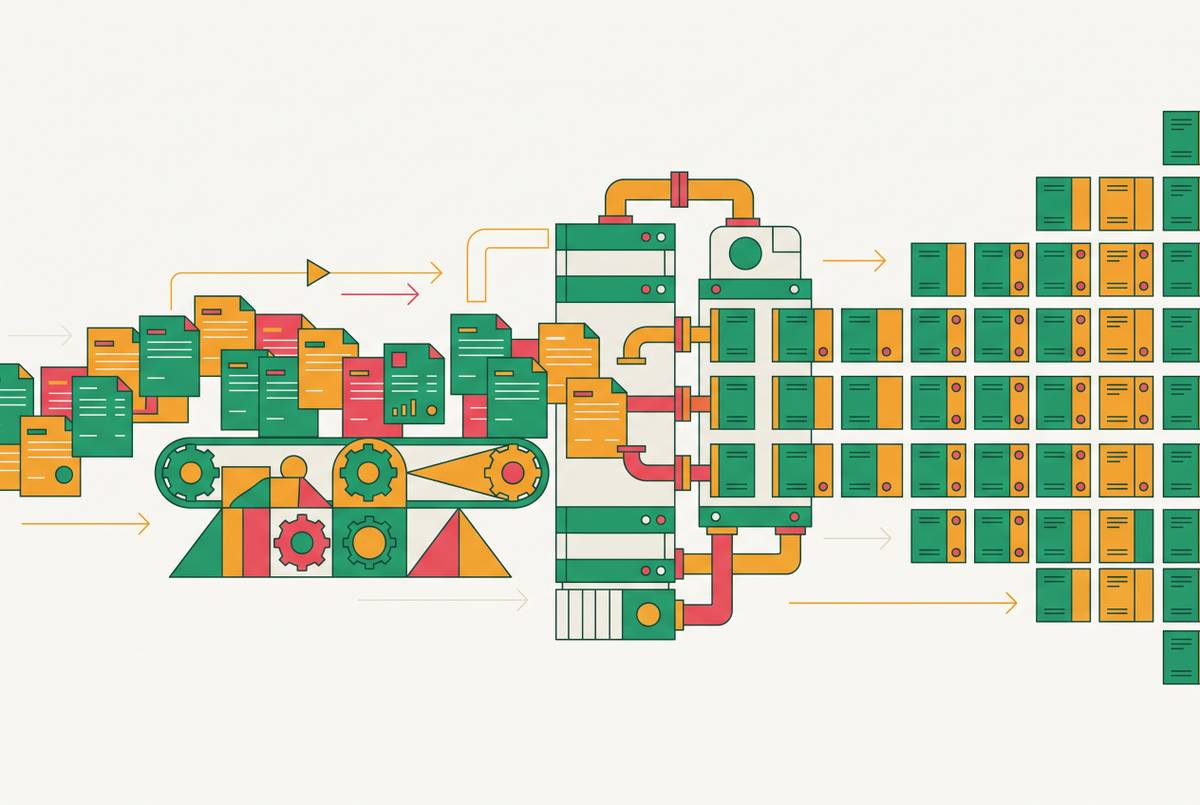
Garnishment math asks a payroll team to hold several rule sets in their head at once for every affected employee: which earnings count as disposable, which state's cap applies, which active order has seniority, and when the remittance is due, with any one of those variables potentially different from the last pay period if a law changed or a new order arrived. This is among the most error-prone work in any pay run, and the error rate doesn't improve just because a company handles more of it. An employer processing orders for several employees at once is solving many separate problems, each one possibly under a different state's rules and a different priority structure. The administrative load builds at every stage: logging the order, notifying the employee inside the required window, filing any statutory response on time, recalculating when a new order shows up mid-cycle, and tracking whether an existing order has been satisfied or released.
For a growing company, the harder problem is building a process that scales without creating new ways to get it wrong as headcount and geography expand. A company hiring its first employee in a new state has to apply that state's garnishment rules correctly starting with the first affected pay run, because the compliance clock starts the moment the order arrives, with no ramp-up period. Multi-state hiring means the same payroll team may be running California's EWOT procedure, North Carolina's 10%-of-gross tax rule, and the federal CCPA default simultaneously, and each one calls for its own calculation and remittance workflow. Garnishment orders are up more than a fifth year-over-year in early 2026, the volume trend driving this entire piece, so growing companies aren't scaling into a stable environment. The number of orders per employee is rising at the same time the headcount is.
How automated payroll platforms reduce garnishment liability exposure
Automating garnishment processing removes the calculation and deadline errors that turn a compliance duty into direct financial liability. The highest-value automation targets map directly onto the error categories that create that liability: getting disposable earnings right for the employee's state, sequencing multiple orders so senior creditors are paid in full before subordinate ones see a dollar, and triggering remittance on the deadline so correctly withheld money actually reaches the creditor on schedule. California's EWOT process makes the case concretely: receiving the order, calculating exempt earnings through the FTB worksheet, withholding the non-exempt amount every pay period, and remitting with the employer's copy of the order attached are several discrete steps that have to execute correctly every single cycle for as long as the order runs. If a system owns each of those steps end to end, it removes the per-period risk of a step getting skipped or mistimed. Tracking orders proactively, watching for satisfaction, release, or supersession, also guards against the opposite mistake: continuing to withhold after the obligation has already ended, which creates its own problems with both regulators and the employee.
For a company scaling across states, a platform that tracks state-specific garnishment rules and updates its calculation logic when those rules change is the only realistic way to stay compliant without standing up a dedicated compliance function for every new state entered. California's AB 774, effective January 1, 2026, illustrates exactly this burden: the procedures an employer built in 2025 are no longer the ones in force, and a platform that keeps its rule sets current removes the need for the employer to catch, interpret, and implement every such change by hand. The resumption of federal student loan Administrative Wage Garnishment, with orders arriving since January 2026 and volume climbing, is a new order type that many employers had no workflow for at all; automated order parsing that recognizes the order type and routes it to the right calculation path closes that gap without a manual rebuild.
None of this removes the employer's underlying legal duty to comply with a garnishment order. What automation changes is the execution layer: the calculation, the sequencing, the remittance timing. Judgment calls still need a human being, whether that means contesting an order's validity, responding to a bankruptcy trustee, or working out whether a termination decision runs into the CCPA's single-debt protection. The case for a growing employer is that automation makes compliance reliable at the scale these companies are now operating at, because the mistakes that create liability happen in the mechanical execution, and that's precisely the layer a well-built platform takes over.