Benefits Enrollment Automation and Employee Experience
Automation builds trust in enrollment by making the process seamless for employees.

EY's research on HR administrative costs ranks benefits enrollment among the priciest tasks HR handles per employee, ahead of routine data entry and plan lookups. That number only tells half the story, though. The real gap between manual and automated enrollment is trust, and the two problems sit closer together than most HR leaders want to admit.
Enrollment is usually the first real interaction a new hire has with the programs touching their health, their money, their family. Whether that interaction feels guided or confusing sets a tone that outlasts the enrollment window by months. MetLife found most employees think their employer could do more to build trust through better benefits delivery, and the ones who report a good experience are far more likely to trust their employer and call themselves healthy overall. Meanwhile, a large share of employees say they genuinely can't parse their employer's benefits communications. That gap, part paperwork problem and part perception problem, gets decided inside a workflow most executives never watch closely enough to notice it's broken.
What manual enrollment actually costs HR teams running it
Start with the number, because it anchors everything else. EY places benefits enrollment among the costliest tasks measured per employee, ahead of data entry and basic lookups. That figure only counts direct labor, though. It skips the cost of errors that creep into manual intake, the kind that surface three weeks later as a carrier discrepancy or a payroll deduction that doesn't match what someone actually picked.
The work itself is grinding, and it's thankless in the specific way that repetitive, error-prone clerical work always is. Someone collects and checks elections one employee at a time, cross-referencing eligibility against employment status, hours worked, plan-specific rules that change depending on who's asking. Then those elections get typed by hand into carrier systems, record by record. Mismatches between what an employee submitted and what the carrier received need chasing down. So do the employees who missed a deadline or left a form half-finished, sometimes more than once.
Spread across a full year, none of this breaks anything. It becomes a problem during open enrollment, when the entire workforce moves through the same process in the same three or four weeks and an already-stretched HR team absorbs a mountain of manual work on top of everything else on their plate. Deloitte found HR professionals spend more than half their working hours on administrative tasks, and benefits administration eats a good chunk of that. Few HR leaders expect their teams to grow next year, so the load isn't shrinking even as headcount holds flat.
The cost that matters most sits underneath the administrative one, and nobody puts a clean number on it: every hour spent chasing a missing enrollment form is an hour not spent on retention strategy or workforce planning. That's the trade happening inside HR teams running this by hand, a real cost playing out daily rather than a hypothetical dreamed up for a slide deck.
How manual enrollment quietly degrades the employee experience it's meant to deliver
An employee's enrollment experience depends entirely on how well HR can run the process. Manual systems set up a bad experience no matter how generous the benefits package looks on paper.
The failure modes are familiar to anyone who's run open enrollment without automation. Windows open with barely any guidance and close before employees feel sure about what they picked. Cost and coverage details come out garbled or inconsistent across different emails. Elections seem to vanish into a void, with confirmation showing up late enough that people start wondering if it went through at all. And when questions pile up during peak weeks, the HR team fielding them is too buried to answer fast.
Employees never see the reconciliation queue or the spreadsheet someone's updating by hand at 9pm. They see the confusion, the delay, the silence those things create; an operational failure reads to them as a communications problem, or worse, as evidence nobody's paying attention.
The damage doesn't stop when open enrollment closes. An employee who fought through a confusing, slow process carries that impression into how they judge their employer's competence and care more broadly. A generous benefits package can feel hollow if using it is clumsy, since the value gets discounted by the friction it takes to reach it. That's where trust starts to erode, and it shows up in engagement and retention numbers long after November.
What the research shows about enrollment experience and retention
Benefits experience and retention track each other more closely than most operators assume. MetLife's data shows employees with a good benefits experience trust their employer at much higher rates, and that trust carries into the rest of the employment relationship instead of staying boxed into benefits season.
Bad onboarding, and a confusing first enrollment is a piece of that, ranks among the most common reasons employees cite for quitting within six months. Gallup found new hires who rate their onboarding as exceptional report satisfaction at dramatically higher rates, and satisfied employees turn over less, produce more, and miss fewer days than dissatisfied ones. Losing a new hire in year one costs a real chunk of their salary, so a bad enrollment experience carries an actual price tag, not just a bruised feeling that fades by spring.
Ask a harder question here: does your investment in enrollment experience target the cause or just the symptom? Better emails and communications training treat the symptom. Process is the root cause, and process is where automation does its work.
What end-to-end enrollment automation actually changes for employees
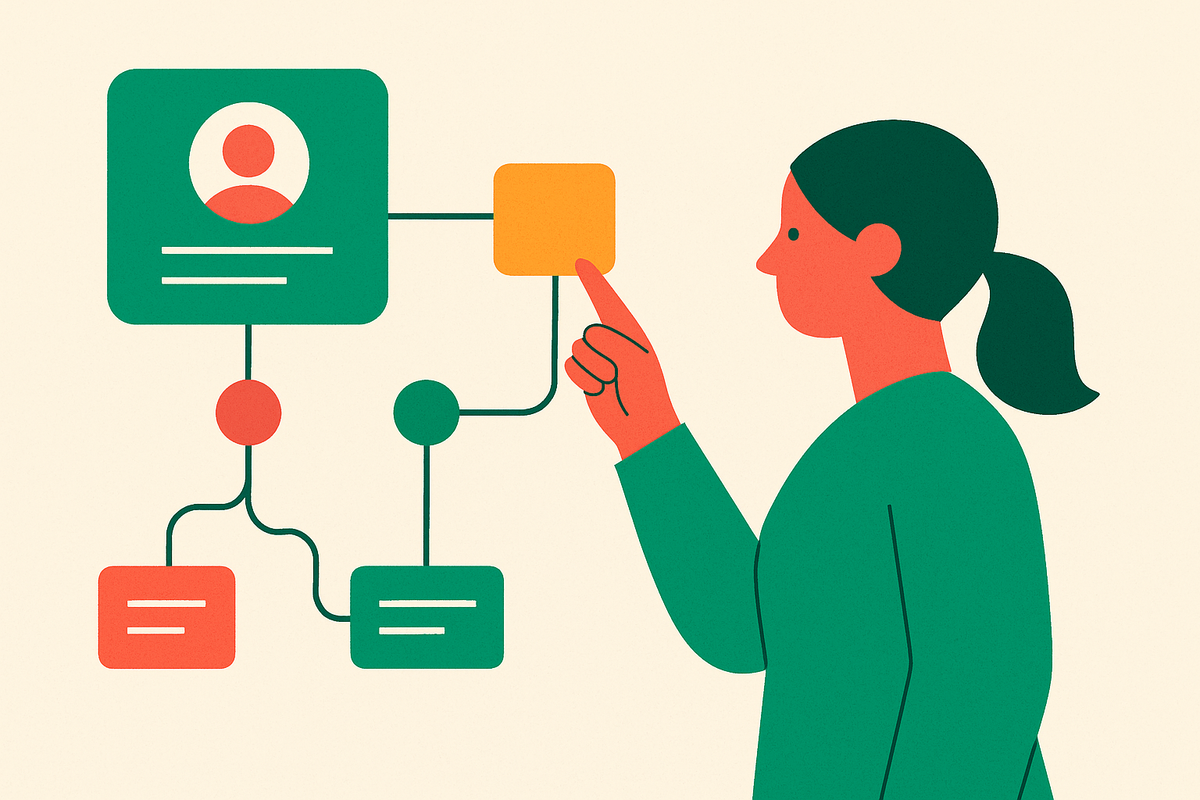
Automated enrollment swaps a string of manual touchpoints for something an employee can move through on their own clock, at their own pace, without waiting on anyone's availability.
In practice, that means enrollment happens where people already work, in Slack, in Teams, inside a unified HR platform, sparing employees a trip to some separate portal nobody remembers the password for. Eligibility gets checked in real time against current employment status, not verified after the fact by someone cross-referencing a spreadsheet three days later. Plan comparisons, cost breakdowns, and decision support live inside the enrollment flow itself, cutting into the confusion so many employees report when it comes to understanding what they're actually buying. Confirmation lands immediately, so nobody sits around wondering if their election went through. Deadline reminders get personalized to where each person actually stands, not blasted out to everyone regardless of who already finished two weeks ago.
The shift moves employees from figuring it out alone and submitting blind to being walked toward a decision they actually feel good about. That guidance is the mechanism that produces the trust enrollment was always supposed to build. AI agents can also field routine questions during open enrollment, things like what a plan covers or whether a dependent can be added mid-year, without needing an HR staffer sitting there live to type back an answer.
What end-to-end automation changes for HR and finance teams running enrollment
Automation kills the manual intake-to-carrier reconciliation loop driving most of the per-employee cost EY's research points to.
Elections flow straight from employee submission into carrier systems: no manual re-entry, no reconciliation queue quietly stacking up behind the scenes. Eligibility rules apply themselves the moment employment status changes, whether that's a new hire starting, a life event, or a termination, instead of someone auditing a list by hand every Friday. Enrollment completion tracking updates live and stays visible to whoever needs it, rather than sitting in a spreadsheet someone refreshes after chasing stragglers all week. Errors get flagged before submission, not after a carrier bounces a file back, which is what actually kills the rework cycle quietly inflating manual enrollment costs.
HR's role shifts too, from running every transaction by hand to overseeing the process and stepping in only for the exceptions that need a human. On the finance side, automation closes the loop between elections and payroll deductions on its own, wiping out a common and genuinely maddening source of payroll error, the kind that generates an angry Slack message from an employee three days after payday.
AI adoption inside HR functions jumped sharply over the past year, and the organizations seeing real productivity gains are the ones that moved past automating single steps into automating the whole workflow. A reminder email covers one step. End-to-end automation runs the whole thing, from eligibility determination through carrier confirmation through payroll sync, with nobody stitching the pieces together by hand.
Why benefits automation fails when it's disconnected from payroll and onboarding
The most common failure in benefits automation happens when enrollment gets automated while payroll, IT provisioning, and onboarding stay separate, manual, and disconnected from it.
The results are predictable once you've seen the pattern a few times. An employee completes enrollment correctly, but payroll deductions don't match their elections because the two systems never talk to each other. A new hire finishes onboarding paperwork, but benefits don't activate because enrollment runs on its own separate timeline in its own separate system. Life events, a marriage, a new dependent, a leave of absence, require manual updates across multiple platforms because a change in one system never reaches the others.
Each gap recreates the exact trust problem automation was supposed to fix. The employee did their part correctly and on time; the employer's systems didn't follow through. MIT's research on AI deployments found only a small share of organizations see real returns on their AI spending, which lines up with this piecemeal pattern: automation touches individual steps but never actually owns the workflow connecting them.
The link between payroll, benefits, and onboarding is where end-to-end automation earns its name. It has to run as one coordinated system, not a relay race between tools that were never built to hand off to each other cleanly.
What to look for in a platform that actually closes the enrollment loop
Here's the test when evaluating a platform: does it own the workflow end-to-end, or does it automate a handful of steps while leaving the handoffs manual?
Payroll integration should mean elections sync straight to deductions, not an export-import routine someone runs by hand every pay cycle. Carrier connectivity should mean elections flow to carriers directly, with no HR staffer re-entering or uploading anything on the other end. Eligibility automation should apply rules the moment employment status changes, without HR intervening case by case. The employee-facing side needs guided enrollment, decision support built into the flow, and confirmation that lands immediately, not a bare form sitting in a portal nobody checks twice. Life events should trigger automatic eligibility re-evaluation instead of dropping into a manual review queue, and enrollment should live inside a unified onboarding flow rather than running on its own separate clock.
A couple of platforms show different points on this spectrum. Rippling connects enrollment to payroll and IT provisioning in one platform and handles multi-state complexity along with carrier connectivity, though companies scaling fast sometimes find the setup work heavier than expected.
The real question for a company growing fast: does the platform need the team to keep managing enrollment by hand as headcount doubles, or does the system keep managing itself?
The compounding return when enrollment works the way it should
Enrollment automation pays off twice. It cuts the administrative drag manual processing creates, and it delivers the employee experience that benefits spending was supposed to produce all along. People treat those as separate line items on a budget somewhere. They aren't. They move together.
An employee who enrolls without friction, gets confirmed right away, and sees their next paycheck match exactly what they picked has already had a fundamentally different relationship with their employer than one who fought through the same process by hand. That first impression is hard to undo later and much easier to get right from the start, as long as the system does the work instead of an overloaded HR team absorbing it manually at 6pm on a Thursday.
For high-growth companies, the stakes scale directly with headcount. A manual process that strains a twenty-person HR team turns into something close to a crisis at two hundred employees, and the trust deficit it builds doesn't reset each cycle. It stacks instead, growing heavier with every pass. The real cost of skipping automation was never just the per-employee number EY put on paper. It's the trust that erodes a little more with every enrollment cycle where the lived experience falls short of what the benefits package actually promised.
That experience gets built, or broken, inside the enrollment workflow, long before anyone files a claim or sees a doctor.