Consolidating HR Tech Stacks onto a Single Platform
Unified HR platforms eliminate the hidden labor costs bleeding money through disconnected tools.

Consolidating HR tools onto one platform stops a tax companies pay quietly on every hire, every payroll run, every new state or country they push into. Almost nobody chooses a fragmented stack on purpose; they inherit one, tool by tool, bolted on the moment some problem got urgent enough to force a decision. The bill for that inheritance arrives later than expected, and it runs higher than anyone budgeted for.
Where manual data entry between disconnected tools actually bleeds money
A payroll tool gets added at the first hire. A benefits portal shows up around fifty employees. IT provisioning ends up running off a spreadsheet some ops person maintains because nobody had the bandwidth to build something better. None of these tools were built to talk to each other, and none were chosen with the next twenty hires in mind. Each one solved a real problem on the day it got bought, which is exactly why the fragmentation sneaks up on people: every individual call looked fine in isolation, and nobody was watching the sum.
The cost lives in the gaps. Someone changes an employee record in one system, and that change has to get typed, by hand, into another. EY has broken this labor down piece by piece: routine data lookups, tax form recording, benefits entry, each with its own time cost, each one repeating across onboarding, offboarding, benefits changes, payroll runs. Add it up across a full HR team's week and it dwarfs whatever number shows up on the software invoice.
Payroll errors happen often enough that HR teams build standing workarounds for them, and every error kicks off its own correction cycle, its own drag on the week, sometimes its own compliance exposure stacked on top of the original mistake. Manual benefits enrollment carries a real per-employee cost too. That cost doesn't hold still as headcount climbs. It multiplies once a company crosses into mid-size territory, whether or not anyone planned for it.
What HR teams lose when administrative work consumes most of their capacity
HR professionals spend most of their working hours on administrative tasks rather than retention, engagement, or workforce planning. When tools don't share data, the humans become the integration layer. Nobody wrote that into the job description.
Structured onboarding built around the first ninety days gets crowded out. Benefits education, the kind that actually determines whether employees use what the company already pays for, falls off the calendar too. Compliance review that should happen ahead of trouble instead happens in response to a notice that already landed on someone's desk. Workforce planning that should let leadership get ahead of hiring turns into scrambling after the fact, always a step behind.
The timing is almost cruel. Administrative load peaks exactly when a company is growing fastest, which is exactly when the strategic work matters most and gets the least attention.
How multi-state and global growth turns a fragmented stack into a compliance liability
One remote hire in a new state can create a tax nexus. Nothing announces it, no alarm goes off; it just happens, the moment that employee logs in from that address. Once it happens, the company owes registration, withholding, and filing in a jurisdiction it may never have tracked before. Multi-state compliance means juggling different wage bases, tax rates, benefit obligations, and filing calendars across every state where people actually sit, not just where headquarters happens to be.
When payroll software has no line into the HR system holding an employee's real address, the failures write themselves. The company never registers in the new state because nobody caught the nexus forming. Withholding gets applied to the wrong state because an address update in one system never made it across to the other. Filing deadlines slip because no single system can see across every jurisdiction the company now touches.
Global growth stacks a second layer on top of the first. A share of companies paying international contractors, not a small one, have at least one worker who meets the local legal test for employment, which opens them up to steep per-worker penalties the moment a regulator looks closely. Cross-border payments bring their own friction: multi-day settlement windows, conversion fees, the kind of drag a disconnected payment tool has no way to remove.
Most companies only find these gaps when a notice arrives in the mail. By then, enforcement has already caught up with them, and regulators keep widening how closely they look at contractor classification across borders.
Onboarding and offboarding as the moments where a fragmented stack is most visible to employees
Onboarding is the one moment where every disconnected tool converges on a single person, all at once. HR sends the paperwork. IT provisions the laptop. Payroll sets up tax withholding. Benefits opens enrollment. Each of these runs off a separate system with close to zero coordination between them, and the new hire lives through all of it on day one, before sitting in a single real meeting.
Few employees describe their onboarding as genuinely good, and that gap costs more than morale. Structured onboarding correlates with meaningfully better first-year retention. Plenty of HR leaders will only call the handoff between recruiting, HR, and hiring managers adequate at best, and more than a few have watched a new hire get zero guidance from a manager in the first days on the job. Manual paperwork frustrates everyone touching it: the HR person processing it, the new hire filling it out. HR teams themselves admit the bad first impression is already showing up in how candidates talk about the company afterward.
Offboarding gets even less attention, which is its own separate problem. When systems are disconnected, access revocation, knowledge transfer, and final payroll happen in parallel instead of in sequence, so none of it is actually coordinated. Access that should die the moment someone walks out the door can stay live for days if IT, HR, and payroll aren't reading off the same record. Institutional knowledge loss is the top complaint companies report when offboarding goes sideways, and a fair number describe real financial worry about how sloppy offboarding compounds year over year.
A unified platform turns both moments into one coordinated sequence. Access, payroll, benefits, and documentation move together because they're all reading from the same record instead of five different ones.
What a unified platform actually changes about how these workflows run
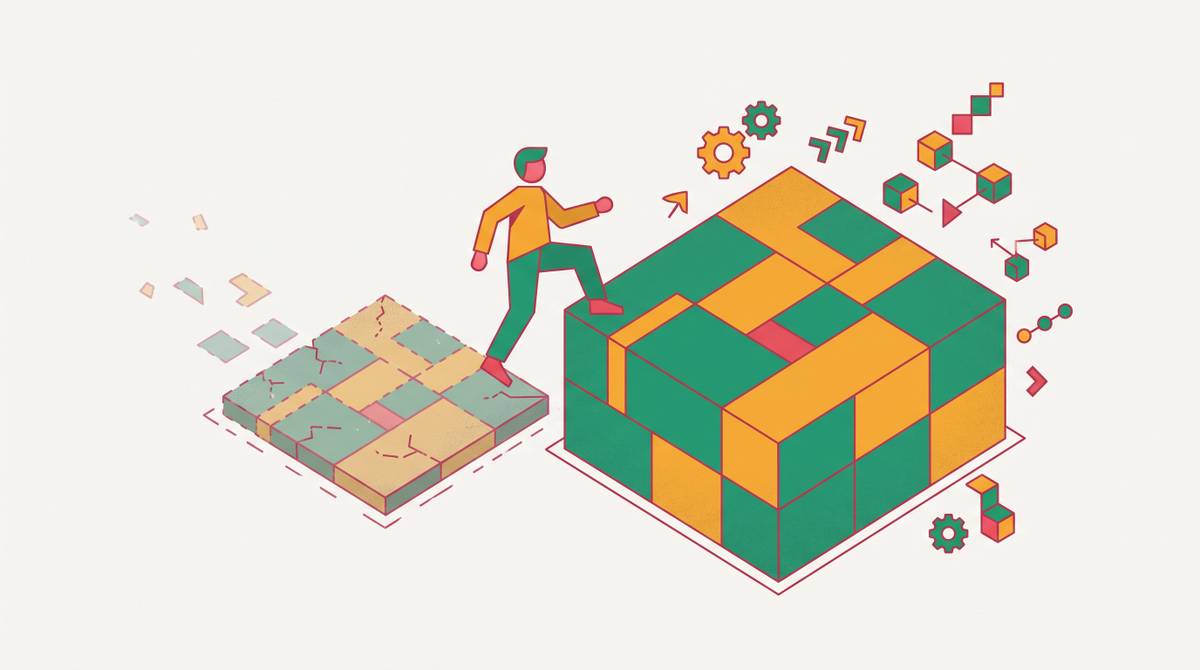
The structural change is simple, even if it doesn't sound like much on paper: a single platform removes the reconciliation step entirely. Employee records, payroll data, benefits elections, and IT access all draw from one source of truth. There's no second system sitting around waiting to be updated by hand.
In practice, a new hire's information gets entered once and flows straight through to payroll, benefits, and IT provisioning. Nobody re-keys any of it. A state tax nexus created by a new remote hire gets flagged and registered without an HR person having to spot it first. Benefits enrollment changes flow directly into payroll deductions, with no human sitting between the two systems checking the math by hand. A departing employee's exit triggers access revocation, final pay, and benefits termination as one sequence, not three running on three separate clocks.
AI agents inside these platforms can own entire processes end to end: opening a state tax account, resolving a compliance notice, running a benefits enrollment window, all without a human kicking off or babysitting each step. Companies running automated benefits administration report real drops in administrative overhead and real gains in enrollment efficiency. Work that used to need a person watching two screens at once now just happens on its own.
How AI agents within a unified platform handle the compliance work that fragmented tools leave to humans
Most HR software automation means fewer clicks, fewer forms, fewer emails to send. AI agents add another layer on top of that: they watch conditions continuously, catch the trigger event as it happens, and act on it without waiting to be asked.
In a multi-state company, the moment an employee's work location changes, the system doesn't wait for someone in HR to notice it on a spreadsheet three weeks later. It identifies the nexus, starts the registration, updates the withholding, all before the next payroll run fires. For compliance notices, a state tax discrepancy, a filing error, an I-9 deficiency, an agentic platform can catch the issue, route it, and resolve it before it turns into a penalty, instead of letting it sit in someone's inbox until Friday.
Analysis of the hire-to-retire lifecycle found that more than half of its operational subprocesses can already be agent-assisted or fully agent-run today. The human-in-the-loop model most HR software still assumes isn't the ceiling people think it is. Agentic AI adoption inside enterprise operations is already well underway, and most organizations running these agents in production report measurable productivity gains. The platforms capturing that edge tend to be the ones built from day one so an agent can own a workflow outright, with AI native to the architecture rather than layered on as an afterthought.
For compliance specifically, the payoff isn't just time saved. The cost of non-compliance runs well above the cost of staying compliant in the first place, so automating this work pays for itself in penalties that simply never happen.
Why consolidation becomes a strategic decision rather than a procurement one as headcount grows
At ten employees, a fragmented stack is an annoyance someone grumbles about in a Slack thread. At a hundred, that same friction is a structural limit on how fast the company can move. Every new hire in a new state adds compliance surface area. Every new benefit plan adds reconciliation work. Every new contractor in a new country adds misclassification exposure. None of it grows in isolation; it all grows at once, on top of a stack that was never built to absorb any of it.
A large share of enterprises are actively planning to switch HR and workforce platforms soon, and the reason is rarely dissatisfaction with any single tool. The tools picked at fifty employees were never built for the compliance and operational load the company carries at five hundred. Consolidating is also a tell about how mature the operation has become: companies that move to a unified platform build infrastructure that can absorb rapid headcount growth without a matching spike in back-office headcount, which matters a great deal more than trimming the number of logins the team juggles each morning.
For founders and finance leaders, the real question is whether the current stack's problems scale in a straight line with headcount or scale exponentially. Manual processes tend toward the exponential case, since each new hire in a new jurisdiction adds a disproportionate chunk of compliance work on top of what already existed. A unified, AI-native platform scales differently: compliance monitoring, payroll processing, and onboarding coordination absorb new volume without demanding a new manual step for every new person walking through the door.
Compliance, payroll, benefits, and IT access can run quietly in the background, handled by the platform itself, freeing everyone else to do the job they were actually hired for instead of sitting between five different logins at midnight.